
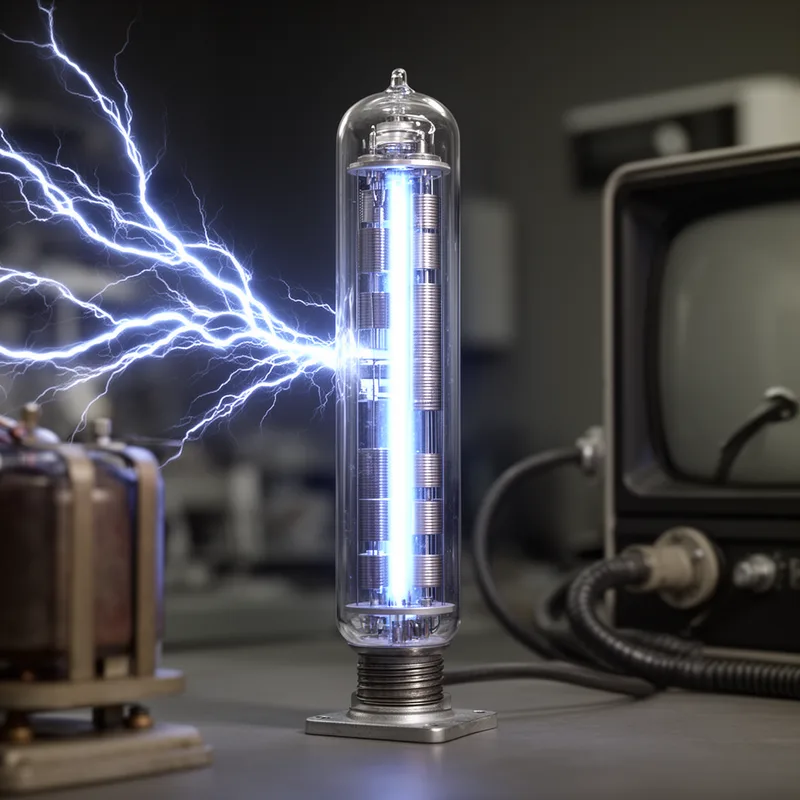
kenotron
- noun
- /ˈkɛnəˌtrɒn/
- Archaic
- The engineer replaced the faulty kenotron to restore the X-ray machine to working condition.
Examples
-
The kenotron was essential in early X-ray machines.
-
Early televisions sometimes relied on a kenotron in their high-voltage power supplies.
-
Because of advances in technology, the kenotron is now mostly a historical device.
-
Many kenotrons were used in older power supplies.
-
The engineer replaced the faulty kenotron to restore the X-ray machine to working condition.
-
Early televisions sometimes relied on a kenotron in their high-voltage power supplies.
-
Many kenotrons were used in older power supplies.
Surface Forms
Morphology
kenotron = keno + tron
Formed from specialised combining forms ('keno-' + '-tron') that are not productive or recognizable as standalone English words to an average learner, so the meaning cannot be reliably derived from common English morphemes.
Etymology
Kenotron comes from the Greek root keno- meaning 'empty' and the ending -tron meaning 'device'. So a kenotron is an 'empty' tube device — a vacuum tube that converts high-voltage electricity into a steady form, which is why it was used in old X-ray machines and early televisions.

