

karyotypic


 1
9.9
1
9.9
- adjective
- /ˌkɛəriəˈtoʊpɪk/
- Specialized
- Carl (or anyone else), I would be really interested in reading more about such karyotypic differences in related species.
Examples
-
Scientists have observed karyotypic variation within species, which in many cases does not result in reduced fertility—e.g., in goats and in marsh rats.
Blog text (26) -
Bats and rodents apparently have a lot of karyotypic variation.
Blog text (26) -
Chromosomal fusion, karyotypic variation within species and between species are ongoing processes and are observable today.
Blog text (26) -
Scientists have observed karyotypic changes between species or sub-species known to be related in the historical era, like the house mouse on the island of Madeira, which in 500 years diversified into six "chromosomal races," two of which have different chromosome numbers.
Blog text (26) -
The karyotypic analysis revealed that the organism had an unusual number of chromosomes.
-
Understanding karyotypic differences can help researchers study evolutionary relationships among species.
-
In many organisms, karyotypic abnormalities can lead to various genetic disorders.
Synonyms
 8
6.3
8
6.3
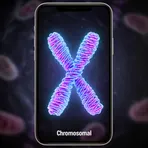
Relating to the parts inside cells that carry genes
 1
9.7
1
9.7
About the study of cells and their chromosomes
Surface Forms
Morphology
Etymology
Karyotypic comes from the Greek parts karyo- meaning 'kernel' or 'nucleus' and -typic from type meaning 'shape' or 'kind'. So karyotypic is about the 'type' or 'shape' of what is inside a cell's nucleus, the chromosomes, which is why it refers to the number, size and shape of chromosomes in a cell.