
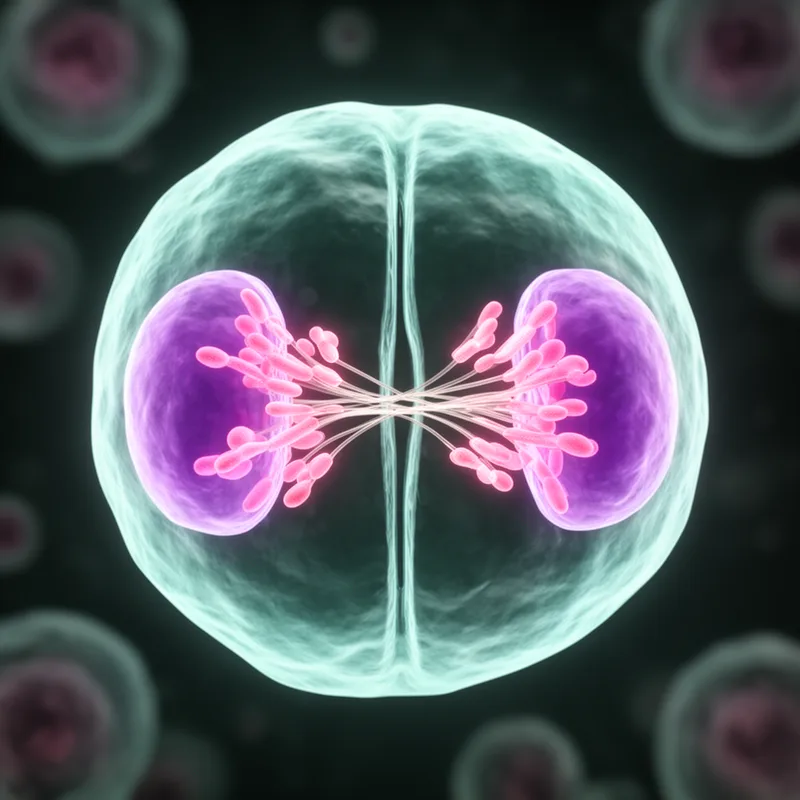
karyokinetic
- adjective
- /ˌkɛəriəʊkɪˈnɛtɪk/
- Specialized
- Observing the karyokinetic figures under the microscope helped the students understand mitotic processes.
Examples
-
Chemotherapy drugs often target karyokinetic functions to prevent cancer cell proliferation.
-
The disorder interrupts normal karyokinetic activity in developing cells.
-
The karyokinetic process is essential for cell division.
-
In biology class, we studied karyokinetic activities.
-
The karyokinetic process ensures that each new cell receives an identical set of chromosomes during division.
-
Students were fascinated by the karyokinetic stages of cell division they observed in the plant cells.
-
Research on karyokinetic mechanisms has revealed important insights into how cancer cells replicate.
Surface Forms
Morphology
Etymology
Karyokinetic comes from two old Greek parts: karyo- meaning 'kernel' or 'nucleus', the cell's core, and -kinetic meaning 'movement', the same root in the word kinetic. So, karyokinetic describes the movement of a cell's nucleus when the cell splits.

