
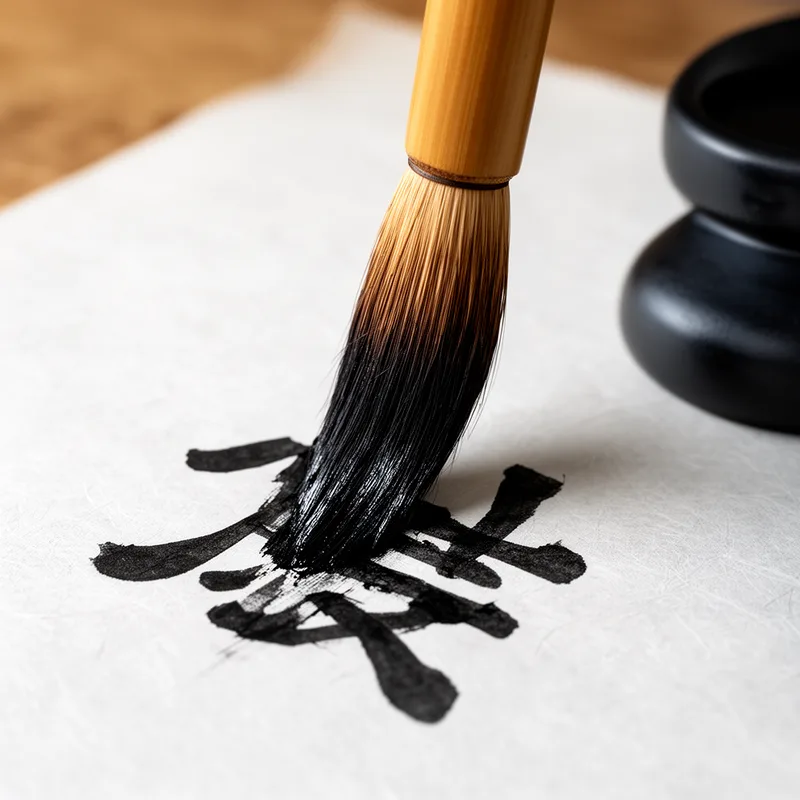
kanji
 8
9.1

- noun
- /ˈkɑːn.dʒi/
- To write a letter in Japanese, you need to use kanji, hiragana, and katakana.
- kanji characters
- kanji and hiragana
- logographic kanji
Loading YouTube…
Watch on YouTubeI can read, I can type in Japanese, but writing all of the kanji.
- I can read, I can type in Japanese, but writing all of the kanji.
Examples
-
I have to learn how to read kanji, hiragana and katakana from zero all by myself.
-
Learning the first two is vital, although kanji is also compulsory to mastering Japanese.
Blog text (9) -
You know, it's in kanji.
-
I recognized the kanji for "bride." "Oh yes," I said.
Fiction book (1990) -
He read the kanji wrong.
-
You can then simply scan through the listed kanji to find what you're looking for.
Blog text (3) -
Modern Japanese is written in a combination of Kanji, Hiragana, and Katakana characters.
Fiction book (1993) -
Toda ended her letter with the kanji for "sailing away" and calligraphed it to match its meaning.
Fiction book (1990) -
All three modes of representation—Kanji, hiragana, and katakana—are ordinarily combined and used to write a sentence.
Academic text (2006) -
She mastered over 1,000 kanji characters as part of her Japanese language studies.
Surface Forms
Etymology
The word kanji comes from two parts: kan meaning 'Han', the name for an old Chinese people and dynasty, and ji meaning 'character' or 'letter'. So kanji literally means 'Chinese characters', which is why it refers to the Chinese-style characters used in Japanese writing.