
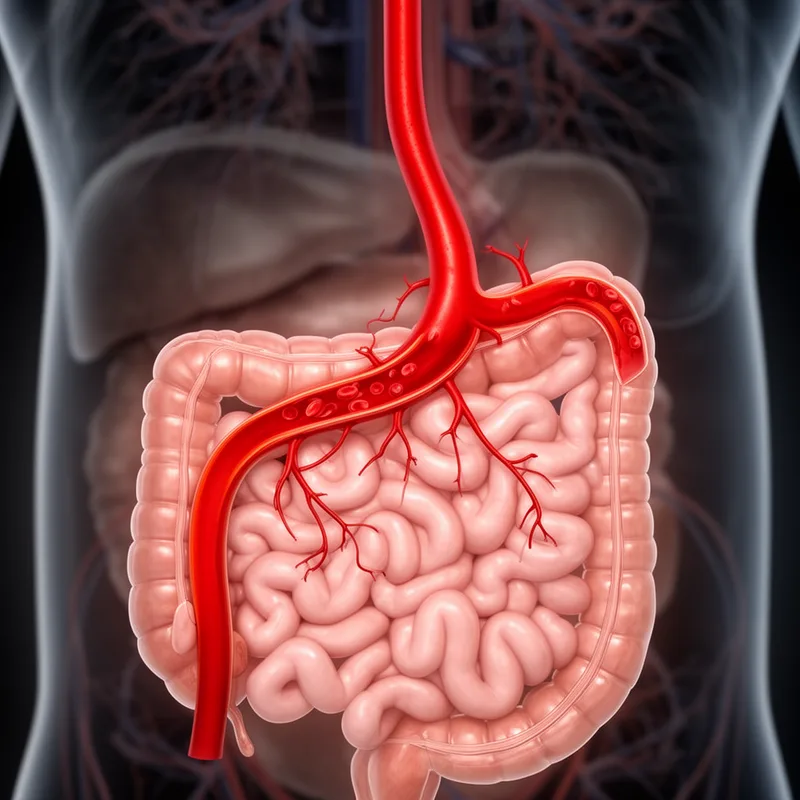
jejunal artery
- noun
- /ˈdʒiː.ju.nəl ˈɑːr.tər.i/
- Specialized
- The jejunal artery supplies blood to the jejunum.
Examples
-
The surgeon carefully identified the jejunal artery before proceeding with the operation.
-
Medical imaging revealed a blockage in the jejunal artery of the patient.
-
Damage to the jejunal artery can lead to insufficient blood supply to the small intestine.
-
Surgeons often examine the jejunal artery during abdominal procedures.
-
Damage to the jejunal artery can lead to insufficient blood supply to the small intestine.
-
Medical imaging revealed a blockage in the jejunal artery of the patient.
-
The surgeon carefully identified the jejunal artery before proceeding with the operation.
Surface Forms
Morphology
The term is fully compositional: 'jejunal' means 'relating to the jejunum' and 'artery' is a blood vessel, so a learner who knows both constituents can infer it is an artery supplying or related to the jejunum. The adjective+noun anatomical naming pattern is regular and cross‑linguistically common, making the meaning directly derivable from the parts.
Etymology
The term jejunal artery comes from the word jejunum, a Latin word meaning 'empty', because early doctors often found this part of the small intestine empty. So the jejunal artery is the artery that brings blood to the jejunum, the middle part of the small intestine.

