

ivory tree
- noun
- The bark of the ivory tree was once prized for its medicinal properties.
Examples
-
Carpenters value the wood from the ivory tree for its unusual hardness.
-
Many ivory trees grow in tropical regions of Asia.
-
Researchers studied the ivory tree to rediscover its traditional uses in treating illness.
-
The ivory tree is known for its hard white wood.
-
Traditional medicine practitioners have long used the bark of the ivory tree to treat dysentery.
-
In some cultures, the roots of the ivory tree have been used as a remedy for diarrhea.
-
The ivory tree is often sought after for its hard wood and its bark's medicinal benefits.
Synonyms

A tropical Asian tree with hard white wood whose bark was used to treat diarrhea
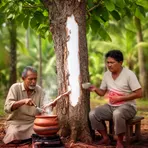
A tropical Asian tree with hard white wood whose bark people use to treat severe diarrhea
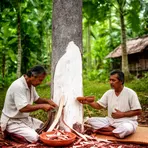
A tropical Asian tree with hard white wood whose bark was used to treat diarrhea

A tropical Asian tree with hard white wood whose bark is used to treat diarrhea

A tropical Asian tree with hard white wood whose bark people used as medicine to treat diarrhea
Surface Forms
Morphology
The meaning — a tree characterized by hard, white, ivory-like wood and bark — is directly inferable from combining 'ivory' (a dense, white/hard material) with 'tree' (a plant). This is a straightforward descriptive noun–noun compound following normal English composition patterns and is cross-linguistically common, so a B1 learner who knows both words should be able to deduce the meaning.
Etymology
Ivory tree comes from the tree's pale, very hard wood that looks like ivory. Because people used the wood and bark for strong tools and as a medicine, the name now points to a tropical tree with white, hard wood and healing uses.

