
ivory-nut palm
- noun
- US
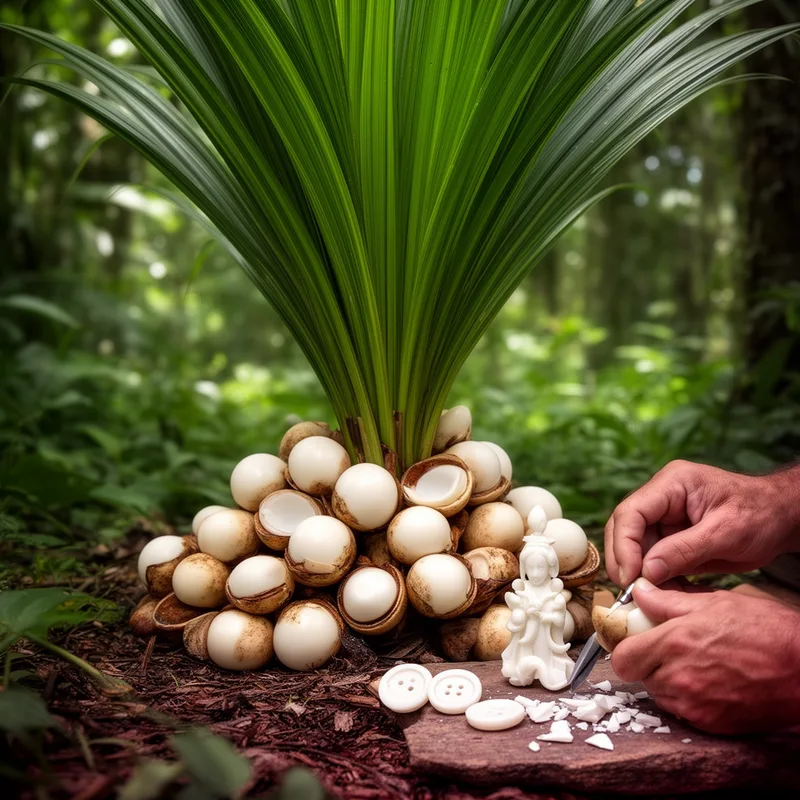
- The ivory-nut palm is valued for its seeds, which closely resemble animal ivory.
Examples
-
Many artisans use the nuts from the ivory-nut palm to carve buttons and ornaments.
-
Conservationists support the cultivation of the ivory-nut palm as an alternative to harvesting elephant ivory.
-
The ivory-nut palm thrives in tropical climates.
-
Many artisans use ivory-nut palms for crafting jewelry.
-
Artisans often use the seeds of the ivory-nut palm to create beautiful sculptures and intricate jewelry.
-
The ivory-nut palm is a sustainable source of material that can help protect elephant populations by providing an alternative to elephant ivory.
-
In the Amazon rainforest, the ivory-nut palm grows abundantly, offering both economic benefits and ecological value.
Synonyms

A palm from Brazil and Peru that makes hard nuts used like ivory

A palm tree from Brazil and Peru that makes hard nuts used like ivory

A South American palm without a stem that makes hard white nuts used like elephant tusks
Surface Forms
Morphology
ivory-nut + palm
The compound is transparently built: a learner who knows 'ivory', 'nut', and 'palm' can infer this refers to a type of palm that produces nuts resembling ivory (i.e., 'ivory-nut' as a modifier of 'palm'). This follows standard noun+noun compounding patterns common across languages, so the meaning is derivable from the constituents without special idiomatic knowledge.
Etymology
Ivory-nut palm gets its name from the tree's hard seeds: the nut looks like ivory and can be carved like elephant tusks. So the name simply describes a palm whose nuts are used as a substitute for 'elephant ivory'.

