
isobutylene
- noun
- /ˌaɪsoʊˈbjuːtɪliːn/
- Specialized
- Workers must monitor all storage areas because isobutylene is highly flammable and volatile.
Examples
-
The chemical plant increased its output of isobutylene to meet the growing demand for high-octane gasoline.
-
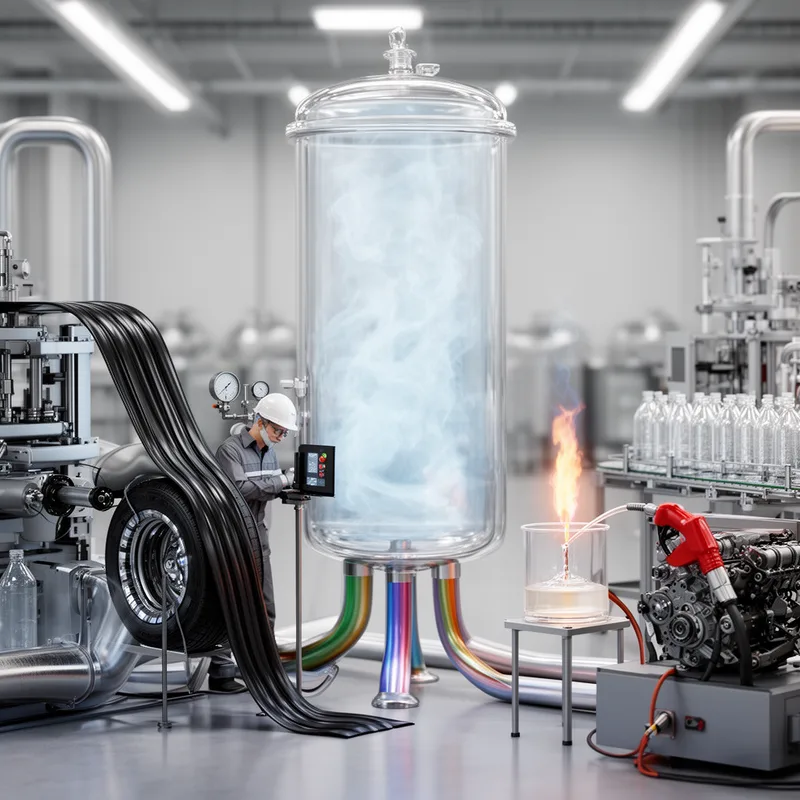
Isobutylene is commonly used as a starting material in the production of synthetic rubber.
-
The chemical isobutylene is often used to produce synthetic rubber.
-
Many industries rely on isobutylene for various applications.
-
Isobutylene is a key ingredient in the production of synthetic rubber and plastics.
-
The factory produces isobutylene in large quantities for use in gasoline additives.
-
Safety measures are essential when handling isobutylene due to its flammable nature.
Synonyms


 1
8.8
A chemical used to make synthetic rubber and other industrial products
Surface Forms
Morphology
Etymology
Isobutylene comes from the prefix iso-, which means 'same', and butylene, a name related to butane, the four-carbon gas. So isobutylene is a 'same' or special form of a four-carbon gas, which is why its name tells chemists it is a flammable gas used to make rubber and plastics.