
isobutane


 1
6.5
- noun
- /ˌaɪsoʊˈbjuːteɪn/
- Specialized
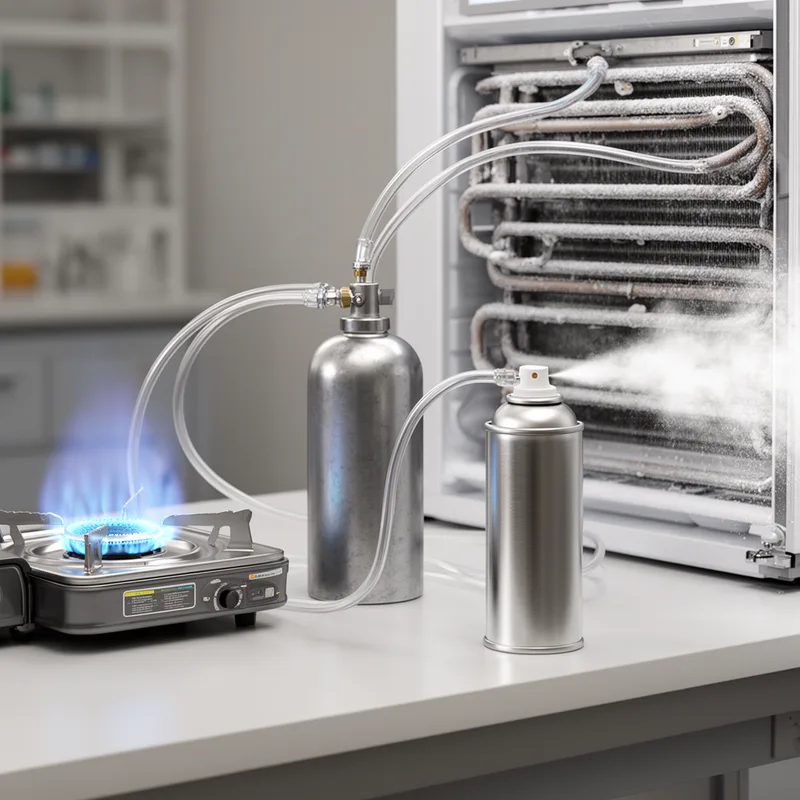
- Refrigerators often utilize isobutane as a refrigerant due to its low environmental impact.
- isobutane and propane
- isobutane and butane
- isobutane fuel
Examples
-
Actually, butane is blended into gasoline, and isobutane is used in alkylate units to produce high-octane alkylate, which is also blended into gasoline.
Blog text (22) -
During camping trips, many people prefer canisters that contain isobutane for their portable stoves.
-
The cycle shown in Figure 3 uses isobutane as the binary heat transfer fluid.
Academic text (1994) -
In Switzerland, 50 percent of residential heat pumps currently run on propane, and in Germany nearly 100 percent of refrigerator/freezers run on isobutane.
Academic text (2007) -
For purposes of comparison, R-134a has a GWP of about 1,300, while that of the hydrocarbon refrigerant isobutane is about 11.
Academic text (1998) -
Considering that R-134a has only about one-fifth of the GWP of R-12, the contribution to TEWI of using either R-134a or isobutane makes a difference of only 1 percent over the lifetime of the refrigerator.
Academic text (1998) -
To efficiently cook outdoors, we use a portable stove that runs on isobutane as fuel.
Surface Forms
Morphology
Etymology
Isobutane begins with the prefix iso-, from Greek meaning 'equal' or 'same', and ends with butane, a four-carbon gas. The iso- part tells chemists this is a special, slightly different shape of butane, so isobutane is a particular type of butane used as a fuel and refrigerant.