

irreligion


 1
9.5
1
9.5
- noun
- /ˌɪrɪˈlɪdʒən/
- In Newman's view, irreligion is the foreign body infecting human thought and culture, especially in its modern (liberal) form.
Examples
-
This governmental preference for religion, as opposed to irreligion, is forbidden by the First Amendment.
Academic text (1997) -
Toward the end of his life, he became increasingly disturbed at the spread of atheism and irreligion, and as a result, came to take greater satisfaction in the unity that already existed among religious minds.
Academic text (1990) -
Irreligion is the only cure.
Blog text (17) -
Unnoticed by the many historians who have described the irreligion of the plantation colonies was a tradition of weekday corporate prayer.
Academic text (2007) -
Values drawn from the well of higher education kept the school up-to-date, while its fundamentalism kept it supplied with gifted students who desired an alternative to the established irreligion and moral limpness of most American colleges.
Academic text (1993) -
Other commentators have rejected this view, concluding that the Establishment Clause forbids not only government preferences for some religious sects over others, but also government preferences for religion over irreligion.
Academic text (1996) -
The increase in irreligion among the younger generation is evident in many surveys.
-
This governmental preference for religion, as opposed to irreligion, is forbidden by the First Amendment.
-
Values drawn from the well of higher education kept the school up-to-date, while its fundamentalism kept it supplied with gifted students who desired an alternative to the established irreligion and moral limpness of most American colleges.
Synonyms
 6
7.5
6
7.5
Not accepting religious ideas about gods
 2
8.3
2
8.3
A lack of belief in God or religion
 1
7.2
1
7.2
A state of being not connected to religion
 1
6.7
1
6.7
A lack of belief in God or other religious ideas

A lack of religious belief or practice

The state of not believing in God or following a religion

Not having religious beliefs or belonging to any religion

Lack of belief in religious or moral ideas
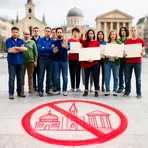
A belief or movement that opposes religion

A feeling or belief against religion
Antonyms


How Religious

Surface Forms
Morphology
Etymology
The word irreligion is made from the negative ir- and religion, and religion comes from an old word meaning 'to bind' or 'care'. So irreligion is like being 'not bound' by religious ties, meaning the absence or rejection of religion.