
iridaceous
- adjective
- /ˌɪrɪˈdeɪʃəs/
- Specialized
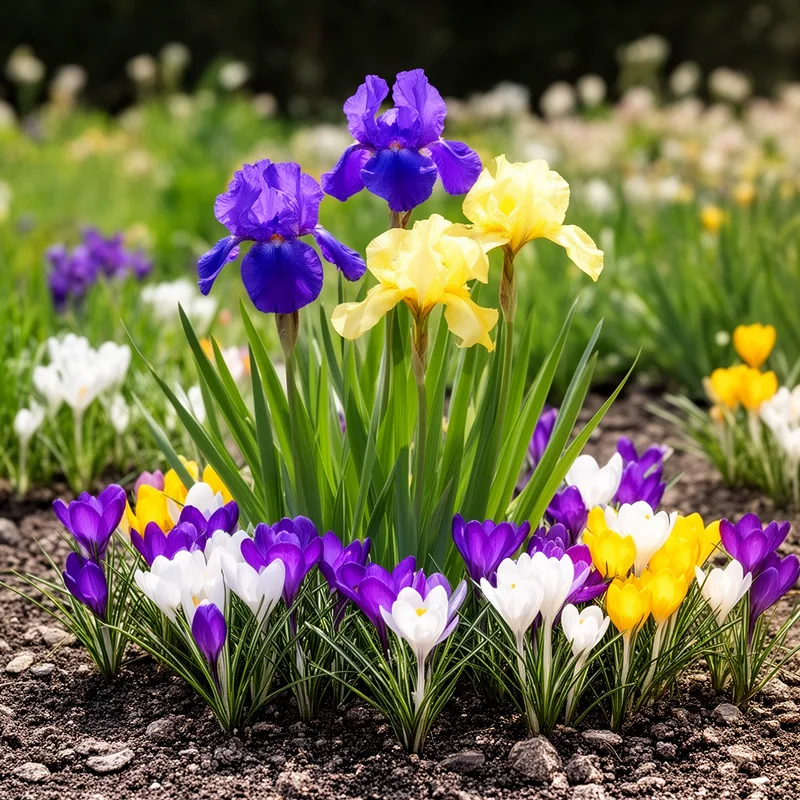
- Many gardens feature iridaceous flowers such as irises and crocuses for their vibrant colors.
Examples
-
The botanist specialized in iridaceous plants native to temperate regions.
-
Soil conditions must be well-drained to support most iridaceous species.
-
The iridaceous flowers bloom in spring.
-
Many iridaceous plants thrive in well-drained soil.
-
Many gardens feature iridaceous flowers such as irises and crocuses for their vibrant colors.
-
The botanist specialized in iridaceous plants native to temperate regions.
-
Many iridaceous plants thrive in well-drained soil.
Compounds
Surface Forms
Morphology
iridaceous = iris (opaque) = irid + aceous
This is a specialized botanical adjective built with the learned suffix -aceous, but the stem irid- is not a common standalone word for most learners.
Etymology
Iridaceous comes from the flower name Iris, which in Greek means 'rainbow' and is the same as the English word iris for the colourful flower. So iridaceous means 'of the iris family', plants like irises and crocuses that often have bright, rainbow-like petals.

