
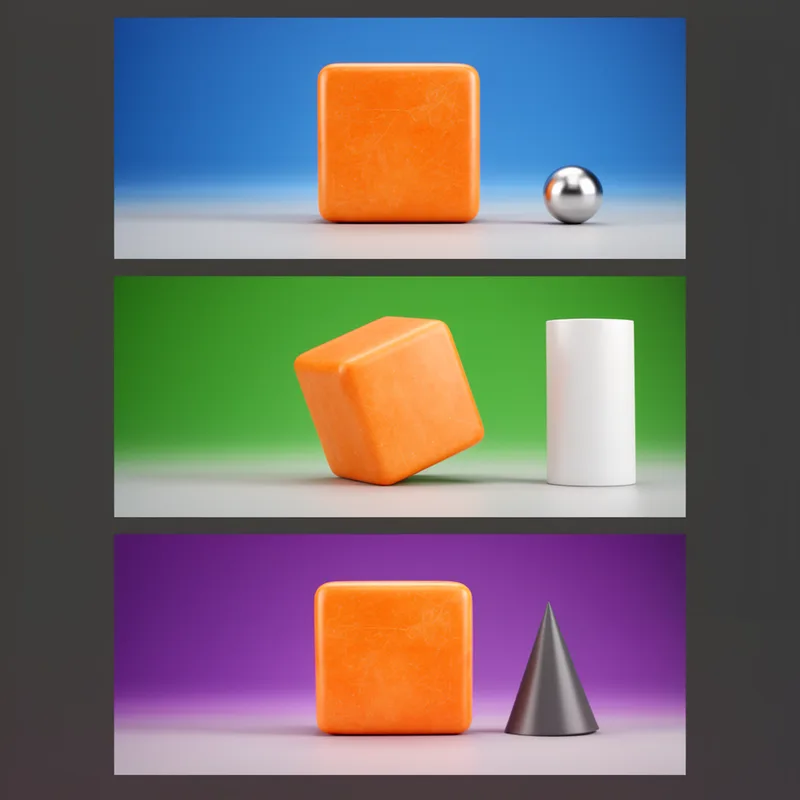
invariance
 1
9.0
1
9.0

- noun
- /ɪnˈvɛrɪəns/
- Specialized
- The invariance of the laws of physics ensures that the same results can be observed under different conditions.
- Lorentz invariance
- gauge invariance
- measurement invariance
Examples
-
The first four models evaluated measurement invariance, and the subsequent three evaluated structural invariance.
Academic text (2012) -
Maxwell's equations, formulated in 1865, embodied both Lorentz invariance and gauge invariance.
Academic text (1995) -
Two types of studies have been used to examine the invariance of general factors across intelligence tests.
Academic text (2013) -
Table 3 contains the fit indices for each step of the invariance analysis.
Academic text (2010) -
Even more significant is the invariance observed with changes in PEB temperature.
Academic text (2001) -
The photon's zero mass is related to a basic invariance property of the electromagnetic field.
Academic text (1997) -
In addition, investigations of factor structure invariance across subgroups are encouraged.
Academic text (2001) -
Future work could consider examining measurement invariance of ACM scores with respect to gender and culture.
Academic text (2007) -
Wigner understood, "In quantum theory, invariance principles permit even further-reaching conclusions than in classical mechanics."
Academic text (1995) -
Larger samples are clearly needed to understand the invariance of these latent abilities (Reeve & Blacksmith, 2009).
Academic text (2013)
Synonyms
 77
3.2
77
3.2
The state of things or actions being the same and in agreement
 1
8.5
1
8.5
A state of not changing over time


 1
8.6
1
8.6
A state in which something does not move or change

A state when something stays the same over time

A state in which something stays the same

The quality of staying the same over time

A state of staying the same over time without becoming different

The quality of not changing over time

A state of not changing over time

Being firmly held in place so it does not move or change

A person or thing that stays firm and steady and does not change easily

A situation in which things are the same and do not change
Antonyms

How Constant

Surface Forms
Morphology
invariance = invariant (transparent) = invari + ance
The noun 'invariance' is transparently formed from the adjective 'invariant' with the suffix '-ance', meaning the state or quality of being invariant.
Etymology
Invariance comes from the prefix in- meaning 'not' and the root var- (seen in the common word vary) meaning 'change'. So, invariance means 'not changing', which is why scientists use it for things that stay the same even when other things change.