
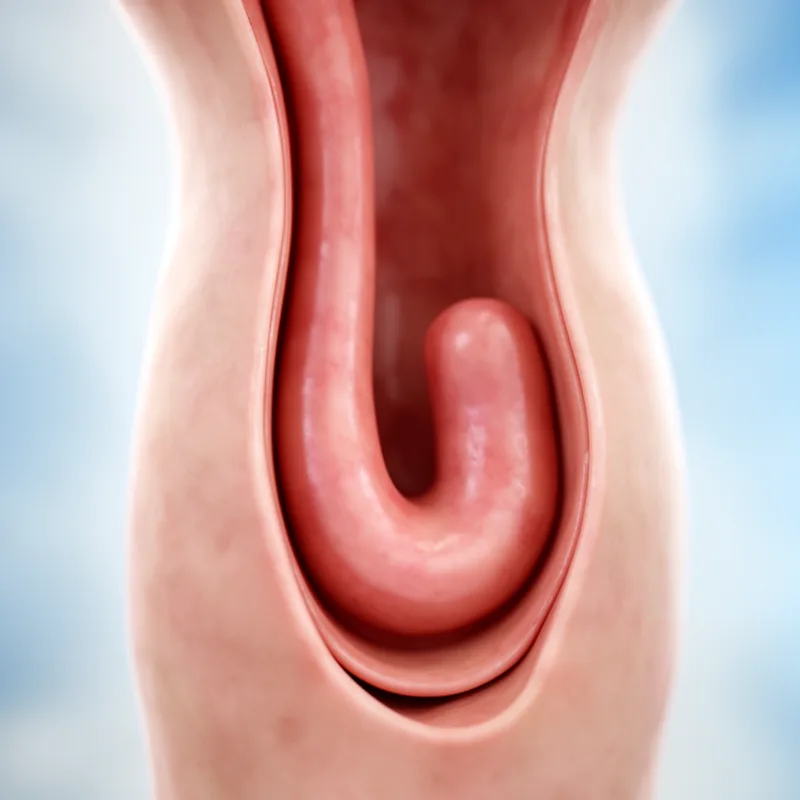
to invaginate
- verb
- /ɪnˈvædʒɪneɪt/
- Specialized
- At one area of the skin, the epithelium invaginated, forming a sinus (fig-1).
Examples
-
The afferent nerve terminal appears to invaginate slightly into the outer hair cell, and there is a postsynaptic darkly stained region along the surface of the nerve fiber involved in the synapse.
Academic text (1998) -
Bone wax was gently placed over the cartilage and round window niche (Figure 4, B), and care was taken not to invaginate the round window membrane.
Academic text (2009) -
OK, So the plasma membrane can invaginate, the plasma membrane can invaginate.
-
Get invaginated much?
Fiction book (1994) -
Placement of a polyethylene or metal stent was almost always successful; the one exception was a patient in whom the metal stent could not be released due to a leak in the invaginated membrane at the site of the elevator bridge of the duodenoscope.
Academic text (1992) -
Invaginated art histories, receptive rather than projective, directly suggest a gendered or specifically feminist charge, but they can be figured more generally in topological terms as deeply informed or channeled surfaces.
Academic text (1994) -
In the developing embryo, certain tissues will invaginate to form organs like the heart.
-
During the surgery, the surgeon noted how the tissue tended to invaginate at the site of the incision.
-
The epithelial layer can invaginate to create a protective cavity within the skin.
Synonyms
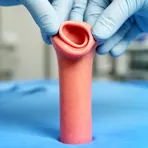
To fold inward as a body part or edge
How Deep


Surface Forms
Morphology
invaginate = invagin (semi-transparent) = in + vagin + ate
The suffix '-ate' is used to form verbs, but the specific biological process meaning is specialized.
Etymology
Invaginate comes from Latin parts in- 'in' and vagina 'sheath'. So to invaginate is to fold something inward as if putting it into a little sheath or pouch, which is why the word means making a cavity or pocket inside a tissue.