

to intone
 3
7.2
3
7.2

- verb
- /ɪnˈtoʊn/
- During the ceremony, the choir will intone traditional hymns to create a reflective atmosphere.
Loading YouTube…
Watch on YouTubeThus, these Passion letters signified how the lecture was to intone the different speaking parts.
- Thus, these Passion letters signified how the lecture was to intone the different speaking parts.
Examples
-
Although I am not a rabbi, in these circumstances I pray to the Almighty that he will forgive me if I intone the blessings.
-
The teacher began to intone the poem in a rhythmic, soothing voice.
-
"On the up," the singer intones, and performers look up.
Academic text (2017) -
"Teach us to care and not to care," the Ash Wednesday prayer intones.
Academic text (1994) -
"The dream has not yet left me," Aq'ab'al intones, "and I still feel guilty."
Academic text (2004) -
"Please do not be troublesome," the form intones: "Do not try to be more intelligent than us."
Academic text (1993) -
"Would the dread of aging," she intones, "take hold of me again?"
Academic text (1993) -
The choir intones, and the saxophone spins out its line.
Academic text (2015) -
"Eloheynu vey-lohey avo-teynu," the prayerful Jew intones, "Our God and God of our fathers."
Fiction book (2000) -
Goldberg doesn't bother; he pockets his little notepad and intones a response to the priest's prayer, all but ignoring Pfefferberg.
Fiction book (1993)
Synonyms
 178
4.4
178
4.4
To sing or say the same words again and again with a steady beat, often with others
 5
7.9
5
7.9
To speak slowly with long vowel sounds

To sing or say words in a chant, often prayers
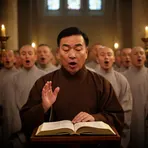
Say words in a musical or serious tone
How Monotonous

Surface Forms
Morphology
Etymology
The word intone comes from the parts in- 'in' and tone 'sound' or 'musical note'. So, to intone is to put your voice into a steady tone, to say or chant something slowly and in a regular, musical voice.