
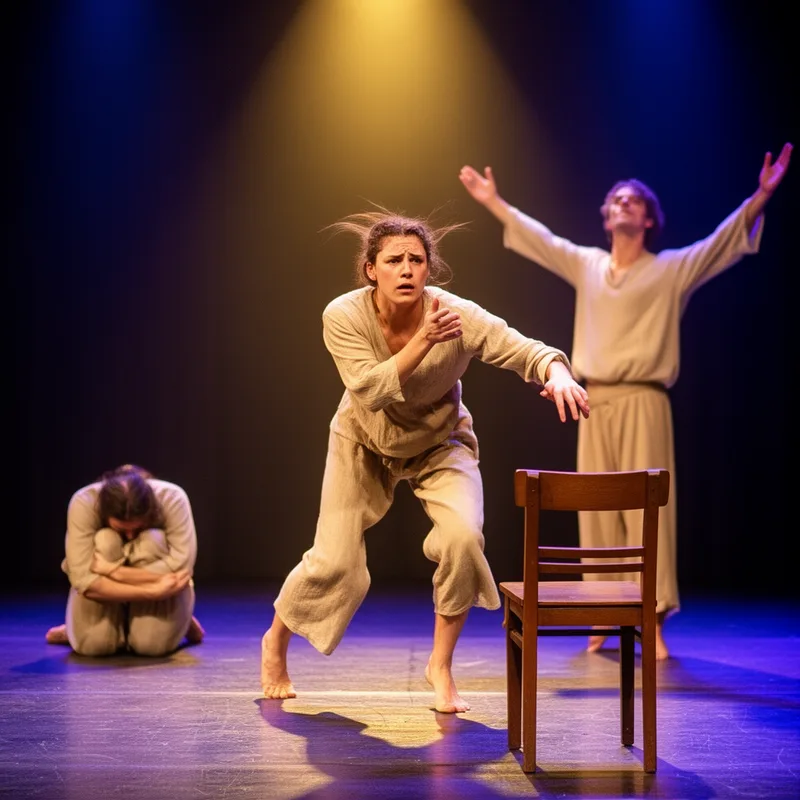
interpretive dancing
- noun
- /ɪnˈtɜːrprɪtɪv ˈdænsɪŋ/
- US
- The performance featured interpretive dancing that illustrated the struggles and triumphs of life.
Examples
-
The students showcased their feelings through interpretive dancing during the school talent show.
-
She expressed her inner thoughts and emotions with interpretive dancing at the art exhibition.
-
Not wanting to jail people for doing interpretive dancing doesn't mean one should condone it or expect a rational society to do anything less than ostracize those who engage in it publicly.
Blog text (10)
Synonyms

 7
3.5
7
3.5

A stage performance with free, expressive body movements
 4
5.6
4
5.6
Dance movements that express emotions and tell a story


 1
6.5
1
6.5
A dance that uses body movements to show feelings or tell a story
A style of modern dance that uses movements to show feelings or tell a story
How Expressive

Surface Forms
Morphology
The phrase is a straightforward adjective+noun composition: 'interpretive' (relating to interpretation/expression) modifies 'dancing', so a learner who knows both words can infer it means dancing that expresses emotions or tells a story rather than following fixed choreography. This compositional pattern is common cross-linguistically and follows normal English word-formation, making the meaning directly derivable.
Etymology
Interpretive dancing comes from the idea of using interpretive movement and dancing to show feelings or tell a story. So, it means 'to express emotions' or 'to tell a story' with movement.