

interpretative dance


 1
6.5
1
6.5
- noun
- /ˌɪntərˈprɛtətɪv dæns/
- She performed an amazing interpretative dance last night.
Examples
-
The festival featured an interpretative dance based on the myth of Persephone.
-
She performed an interpretative dance that moved the entire audience to tears.
-
During the competition, his interpretative dance depicted the struggle between hope and despair.
-
The students are learning interpretative dances in their class.
-
At the art festival, she performed an interpretative dance that expressed her feelings of joy and freedom.
-
The choreographer created an interpretative dance to portray the struggles of life through fluid movements.
-
During the showcase, the dancers delivered an interpretative dance that communicated a powerful story about love and loss.
Synonyms
 4
5.6
4
5.6
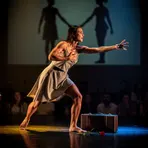
Dance movements that express emotions and tell a story
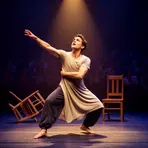
A style of modern dance that uses movements to show feelings or tell a story
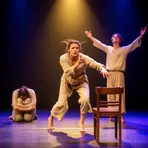
A style of dance that uses movements to show feelings or tell a story
Surface Forms
Morphology
The noun phrase is compositionally transparent: an "interpretative" (interpretive) activity + "dance" straightforwardly yields a dance that interprets or depicts emotions/stories. This adjective+noun pattern is a standard, cross-linguistically familiar construction, so a B1 learner who knows both constituents can reasonably infer the meaning.
Etymology
The term interpretative dance comes from the idea of using the body to 'interpret' a story or feeling instead of following set steps. Imagine a dancer using arms and face to show sadness or joy, and you can see why interpretative (to 'interpret') plus dance means a dance that 'tells a story' or 'shows emotions'.