
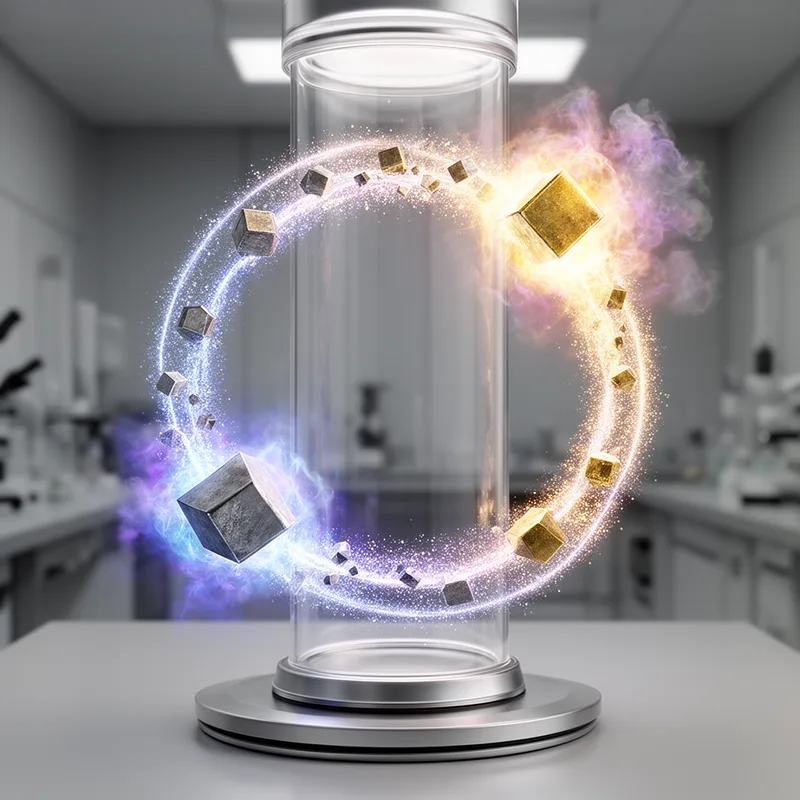
interconversion
- noun
- /ˌɪntərkənˈvɜrʒən/
- Specialized
- The computed energy difference (1 kcal/mol) is rather small, and the important fact is that the interconversion is nearly thermodynamically neutral and easily takes place kinetically because of the small barrier.
Examples
-
She then offers explicit interconversions, an important addition because of the persistent lack of consensus in the literature and in the workplace.
Academic text (2003) -
And finally, arginine-to-proline interconversion inherent to SILAC 5,6 does not present a problem for quantification of 15N-labeled peptides.
Blog text (15) -
In biology, interconversion occurs when different forms of a substance change into each other, such as between glucose and glycogen.
-
The interconversion of solid and liquid water demonstrates how substances can change state under different temperature conditions.
-
During interconversion, carbon dioxide can transform into glucose through the process of photosynthesis in plants.
How Reversible


Surface Forms
Morphology
interconversion = conversion (transparent) = inter + convert + ion
The meaning is a straightforward combination of 'inter-' (between/mutual) and 'conversion' (the act of changing), yielding mutual change.
Etymology
Interconversion is made of inter- meaning 'between' and convert meaning 'to change'. So, interconversion is the process of things changing into each other and changing back, which is why it means 'change back and forth' between forms.