

intensive care
 50
3.0
50
3.0

- noun
- /ɪnˈtɛnsɪv kɛr/
- Specialized
- The weeks of intensive care were the darkest of my life.
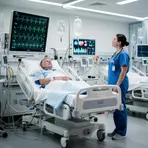
- intensive care unit
- intensive care unit (ICU)
- intensive care patients
Loading YouTube…
Watch on YouTubeNow, if you can picture that, that was me when I was laid up in intensive care for those six months.
- Now, if you can picture that, that was me when I was laid up in intensive care for those six months.
- Now, Victoria had horrific injuries, spinal, you know, she was in intensive care for close to six months.
- So they put me to sleep somehow didn't die, woke up in intensive care.
- It could literally save their life, save them from an intensive care unit visit, save them from being on a ventilator.
- And if it gets to the point that that professional says she would benefit from some short term intensive care, then we will call Center for Discovery.
- And that causes huge burden on the intensive care units across the country.
- They check him in to the ICU intensive care unit.
- The Chancellor of Germany declaring that German intensive care units would be full within a few weeks.
- Have you ever been in the neonatal intensive care unit or the pediatric intensive care unit because of a genetic problem?
- Also, intensive care units in Spain and Italy are struggling with a new surge of COVID cases.
- He ended up in intensive care for months, got battered.
- I describe John Ashcroft's skin color when he's in intensive care.
Examples
-
Shelly Webster held on for 30 hours in intensive care.
-
Sidney died the next day in the intensive care unit.
-
We're planning on moving her out from intensive care later this afternoon.
-
- He was in intensive care for eight weeks.
-
The next day, they moved him to intensive care, and a week after that, he was dead.
Fiction book (1991) -
Marshall is listed as critical and under intensive care.
-
One person was admitted to the intensive care unit, and shock subsequently developed.
Academic text (2012) -
In the intensive care unit, six doctors and 34 nurses are on duty for him.
-
We've moved him up to the cardiac intensive care unit.
-
After her surgery, she was placed in intensive care for close monitoring.
Synonyms
 106
3.7
106
3.7
A hospital area where very sick people get constant medical care
 18
3.1
18
3.1
A hospital area where very sick patients get constant care and monitoring
How Intensive

Surface Forms
Morphology
The components 'intensive' (highly concentrated/serious) and 'care' (medical treatment) together clearly convey the idea of heightened or concentrated medical attention, so a B1 learner would grasp that it refers to serious medical treatment. However, the specific institutionalized sense (a dedicated hospital unit with close monitoring, i.e. the ICU) and some clinical connotations may not be fully predictable without prior exposure, so full comprehension is not guaranteed.
Etymology
Intensive care grew from hospital rooms where very sick people needed constant, strong treatment and had to be watched all the time. The word intensive means extra strong or close, and care means medical help, so the phrase now names a special part of the hospital where patients get close attention.