
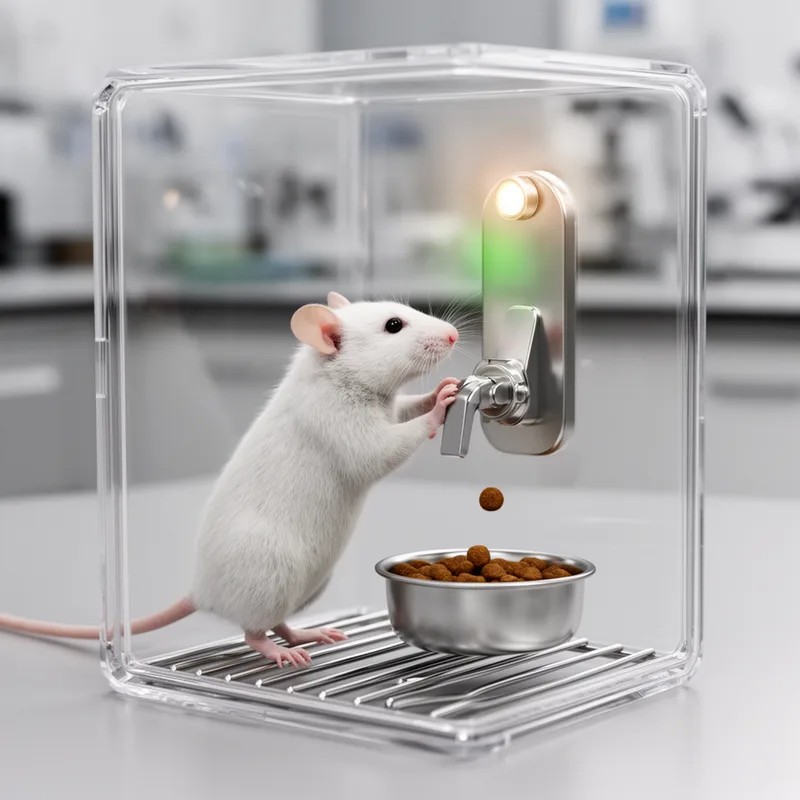
instrumental conditioning
- noun
- /ˌɪnstrəˈmɛntəl kənˈdɪʃənɪŋ/
- Specialized
- In psychology classes, we learn about instrumental conditioning, where behaviors are modified through rewards and consequences.
Examples
-
Our previous efforts have focused on instrumental conditioning under differential reinforcement of low rates of responding (DRL) and shuttlebox avoidance learning (Port et al., 1990).
Academic text (1993) -
OK, so so you guys are going to help me perform instrumental conditioning and then we'll discuss what that is.
-
Children can benefit from instrumental conditioning when they receive praise for completing their homework.
-
The training session demonstrated instrumental conditioning by rewarding the dog with treats for obeying commands.
Synonyms

 1
5.1
1
5.1

A way of learning where a behavior increases after reward or decreases after punishment
Surface Forms
Morphology
The compound links 'instrumental' (serving as a means/causal) with 'conditioning' (shaping behaviour), so learners can partially infer it refers to a kind of behavioural learning where actions are consequential. However, the precise technical sense—behaviour strengthened or weakened by consequences contingent on the action (operant/ instrumental learning)—is specialised and not fully predictable for a B1 learner without prior exposure.
Etymology
Instrumental conditioning comes from the idea of using the word instrumental to mean a 'tool' and conditioning to mean 'teaching' a response. Imagine a trainer giving a treat right after a dog sits; the treat acts as a 'tool' so the dog learns, and that's why the phrase means learning where actions are changed by what happens next.