

to inosculate
- verb
- /ɪˈnɒskjʊleɪt/
- Specialized
- Certain blood vessels may inosculate during the healing process, restoring circulation.
Examples
-
The two branches of the tree inosculated over time, forming a natural graft.
-
In some cases, the roots of neighboring plants can inosculate underground.
-
The two branches inosculate to form a larger limb.
-
The blood vessels inosculated during the healing process.
-
Certain blood vessels can inosculate, forming new connections to enhance blood flow.
-
As the plants grew, their roots began to inosculate, intertwining below the soil.
-
Over time, the two branches inosculated, creating a sturdy and unified limb.
Synonyms
 1
9.9
1
9.9

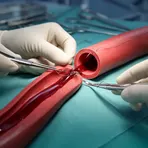
To join two tubes like blood vessels so liquid can flow through

To become tangled together like roots so parts are hard to separate
Antonyms

How Joined

Surface Forms
Morphology
Etymology
The word inosculate comes from Latin parts in- 'in' and osculare 'to kiss', so you can imagine two tubes or branches 'kissing' each other. That's why to inosculate means to join or grow together, as when blood vessels, roots, or branches meet and become one.