
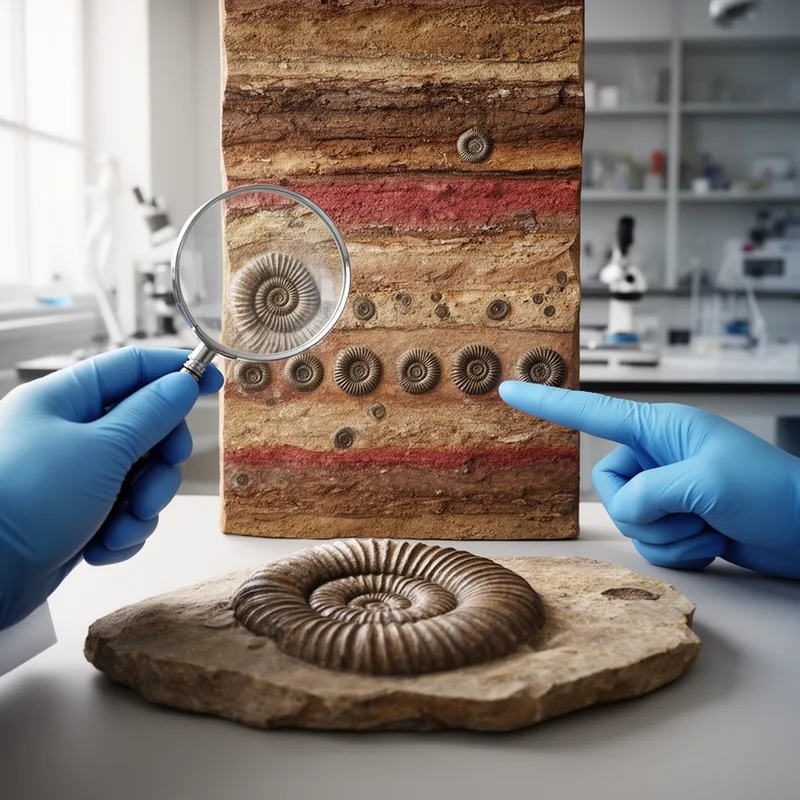
index fossil
- noun
- /ˈɪndɛks ˈfɑsəl/
- Specialized
- The discovery of an index fossil helped the scientists quickly determine the age of the sedimentary rocks.
Examples
-
Trilobites are a classic example of an index fossil used by geologists to date Paleozoic rock layers.
-
Because ammonites have a wide geographic range, they serve as important index fossils for the Mesozoic Era.
-
The index fossil helped scientists date the rock layer.
-
Many index fossils are used in geology.
-
Ammonites are considered excellent index fossils because they lived during specific geological periods and can help date rock layers.
-
Geologists often rely on trilobites as key index fossils to determine the age of sedimentary rocks.
-
The presence of specific index fossils in a rock layer indicates that it was formed during the Ordovician period.
Synonyms

A fossil that lived in many places for a short time and shows the age of rock layers
Surface Forms
Morphology
The compound clearly combines 'index' (an indicator) and 'fossil' (remains of ancient organisms), so a learner who knows both words can infer it denotes a fossil used as an indicator. However, the precise technical function — fossils used to identify and date specific geological layers — is specialized and not fully predictable from the constituents alone, making the term partially transparent to B1 learners.
Etymology
Index fossil comes from the idea of an index in a book: a fossil that points to a specific time. Scientists use these fossils as markers to 'identify' and 'date' the rock layer where they are found.

