
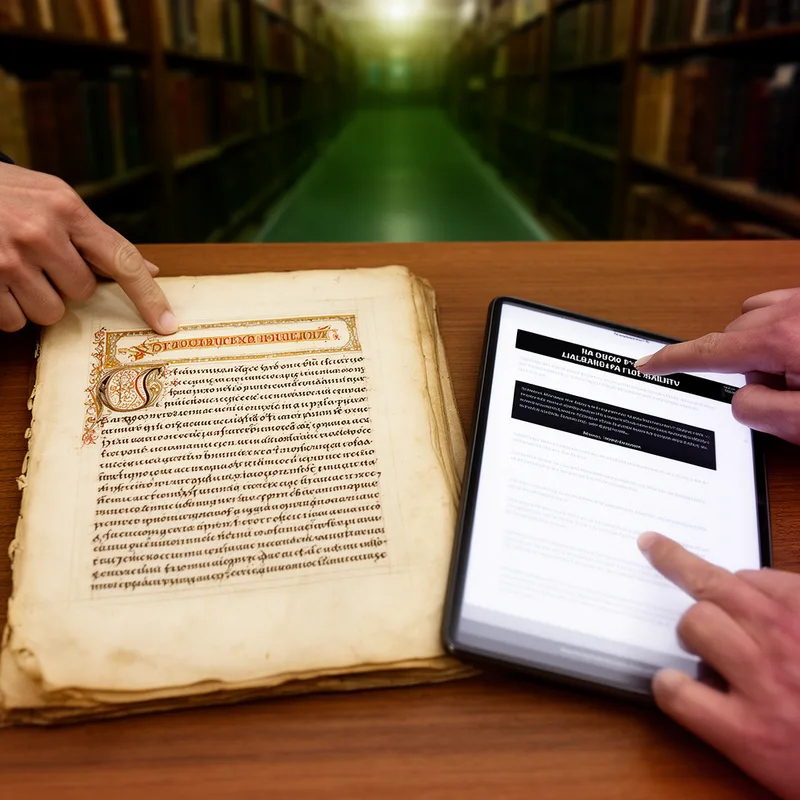
incipit
- noun
- /ˈɪn.sɪ.pɪt/
- Literature
 :
incipit
:
incipit
- The incipit of the novel introduces the main character and sets the tone for the story.
Examples
-
When Calisse published his edition, he failed to notice that "Maiolichinus" was a later modification to the original title in the incipit of the principal manuscript, and he did not explain why the text of the poem itself always refers to Majorca as "Maiorica" rather than "Maiolica."
Academic text (1996) -
The images of standing figures that follow also recall the historiated incipit initials found so often in twelfth-century manuscripts (Figs. 2, 3).
Academic text (1999) -
The same situation is repeated in the incipit of "The Sisters" where the boy keeps returning to the house of the priest.
Academic text (1991) -
In the incipit, it extracts words from their contexts, links them in new associations, and transforms them from sound into being.
Academic text (1991) -
That is especially true of the liturgical constitution, Sacrosanctum Concilium, the council's chronological and theological incipit.
Academic text (2010) -
"And here Boyle cites the incipit of 105: "I never used to sing as I used to, for I was not understood; wherefore I was scorned, and one can be miserable in a pleasant place."
Academic text (2003) -
Moreover, they remind the reader of the incipit of "The Sisters" with regard to theme (death, for instance); situation (e.g., a boy looking through a window from the dark outside to the lighted inside, trying to discover whether an old man has died; a middle-aged man looking through a window from the dark inside to the lighted outside, imagining seeing a young man, now dead, standing under a tree); and, finally, with regard to linguistic elements.
Academic text (1991) -
In classical music, the incipit often defines the theme that recurs throughout the piece.
-
The manuscript's incipit gives readers a glimpse into the author's style and intentions.
Synonyms

 81
2.1
81
2.1

The first part of a book, speech, or essay that explains the topic
 21
6.0
21
6.0
An opening part of a play that explains the story or background
 14
2.9
14
2.9
A short piece of music that comes before a song starts
 9
4.9
9
4.9
A short introduction before the main part of a talk or story
 8
2.8
8
2.8
The first line of a book or article that grabs attention


 1
9.5
1
9.5
A short introduction at the start of a book, poem, or speech

A short introduction before the main part of a book

A short piece of music sung or played at the start of a church service
Antonyms


Surface Forms
Etymology
The word incipit comes from the Latin incipere, which simply means 'it begins'. So an incipit is the opening words or first lines of a text that show where the work starts.