
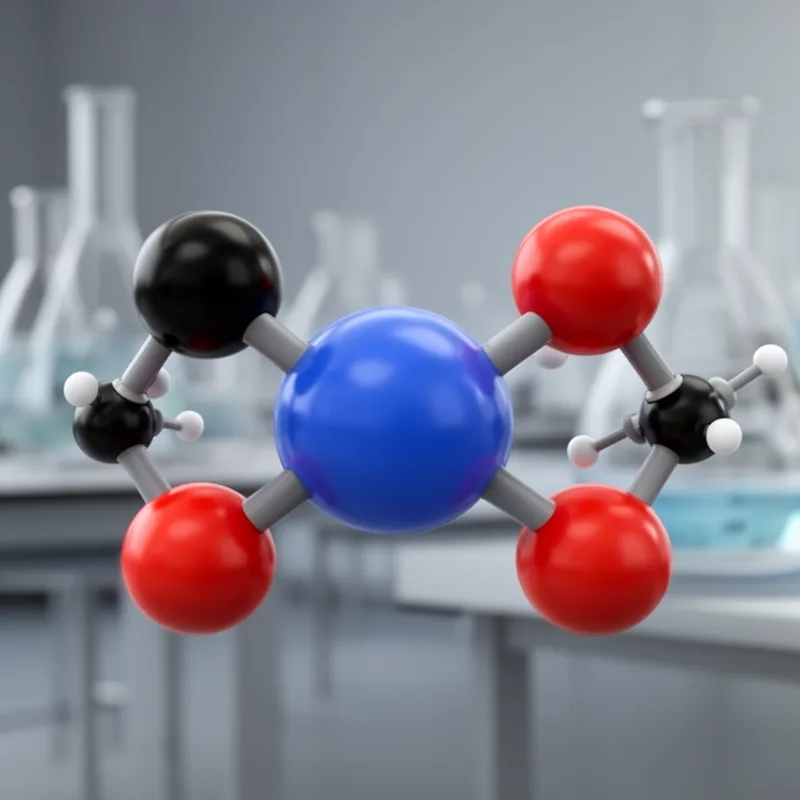
imide
- noun
- /ˈɪmaɪd/
- Specialized
- In organic chemistry, an imide is formed when the oxygen in an acid anhydride is replaced by nitrogen.
Examples
-
Further thermal treatment evaporates the remaining solvents (mainly DMAc) in the fibers and simultaneously converts the PAA fiber into its imide form through cycloimidization.
Academic text (2018) -
The chemist synthesized a new imide compound for use in high-performance plastics.
-
Researchers are studying how imides can improve the thermal stability of polymers.
Synonyms
A chemical with an imide group used to make plastics and medicines
Surface Forms
Etymology
Imide is built like many chemical names: it shares the core amide and the ending -ide, as in oxide, so you can see it belongs to a family of related compounds. An imide is a chemical where two oxygen atoms are replaced by 'NH' groups, which are a nitrogen and a hydrogen together, so the name shows it is like an amide but with that important change.

