

imbrication
- noun
- /ˌɪmbrɪˈkeɪʃən/
- Specialized
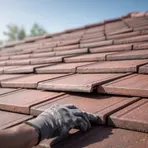
- The architect designed the roof with an imbrication of tiles to ensure proper drainage.
Examples
-
The artist's mural features an imbrication of colors that blend seamlessly into one another.
-
In her presentation, she illustrated the imbrication of different cultures through overlapping traditions.
-
This clearly reveals the imbrication of power and history.
Academic text (2017) -
The first concerns the imbrication of Berlin's life experiences, learning, and writing.
Academic text (1999) -
She also correctly observes the global imbrication of economic production and cultural production.
Academic text (2008) -
He saw its class basis, its imbrications in class power, and the distribution of wealth and resources.
Academic text (2014) -
The imbrication of animals and humans in both life and in death is not only represented for the viewer; it is lived by the artist and her companions.
Academic text (2015) -
The Fowler favors the exhibition and collection of contemporary works that are grounded in particular cultural milieus or that reflect an imbrication of local and global.
Academic text (2002) -
In considering the imbrication of discourse and the world, she discusses cross-linguistic research on language and worldview, on language and verbal art, and on language and ideology.
Academic text (2002) -
While the former focuses on the function of women in the homosocial contest between the protagonist and his sponsor, the latter addresses the imbrications of nationalism and gender politics in the novel.
Academic text (2017)
Synonyms
 5
3.5
5
3.5

One thing partly covers another, like tiles on a roof


 1
6.0
1
6.0
A way pieces partly cover each other to protect or decorate
How Overlapping

Surface Forms
Morphology
Etymology
The word imbrication comes from an old Latin word imbrex, meaning 'roof tile'. It names a pattern where parts lie like roof tiles, each one partly covering the one below, and that is why it means 'overlapping elements' today.