
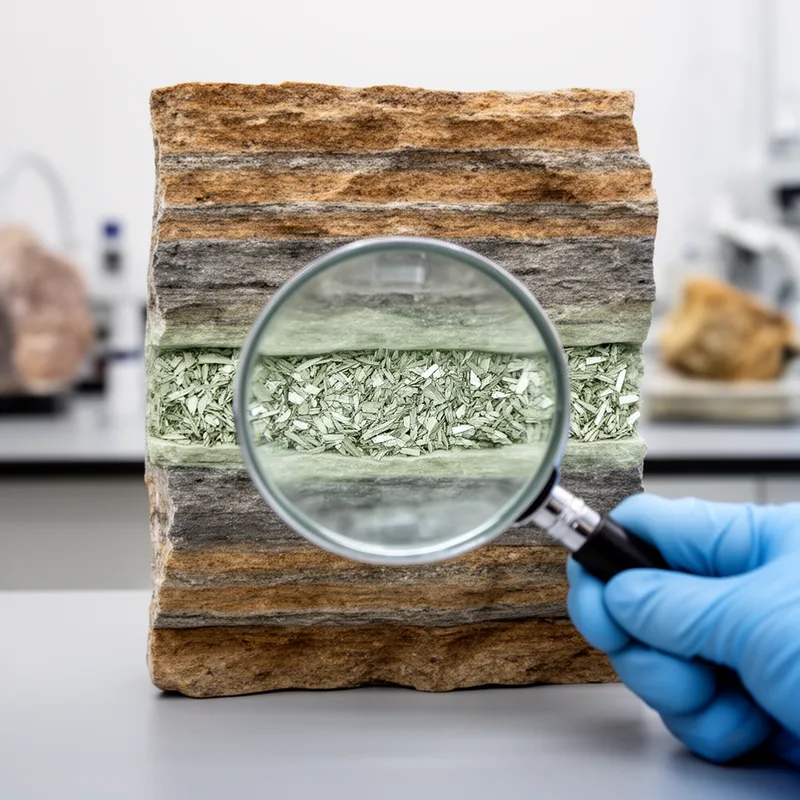
illite
- noun
- /ˈɪlˌaɪt/
- Specialized
- The scientists analyzed the sediment and found that it contained a significant amount of illite, indicating its formation in a clay-rich environment.
- K-rich illite
Examples
-
The sand and silt are composed mainly of quartz, and the clays are composed of clay minerals such as kaolinite, montmorillonite, illite, and vermiculite.
Academic text (1993) -
During the laboratory tests, the researchers noted that the presence of illite influenced the properties of the clay samples significantly.
-
Finally, all tested specimens presented a dehydration of gels occurring at around 800 degrees C; possibly due to the dehydroxylation of illite and chlorite content in the RCBW, which are not reacted.
Academic text (2018) -
The highest weight loss (2.80%) was detected between 677 and 900 degrees C, which is possibly related to the dihydroxylation of 'illite' content in the RCBW sample 36, 37.
Academic text (2018) -
Geologists often identify illite in sedimentary rock samples due to its similar structure to mica and its prevalence in clays.
Surface Forms
Etymology
Illite uses the common mineral ending -ite, which means 'mineral' or 'rock'. So illite is simply the name for a clay mineral — think of it as the clay cousin of mica, with a similar layered structure.

