
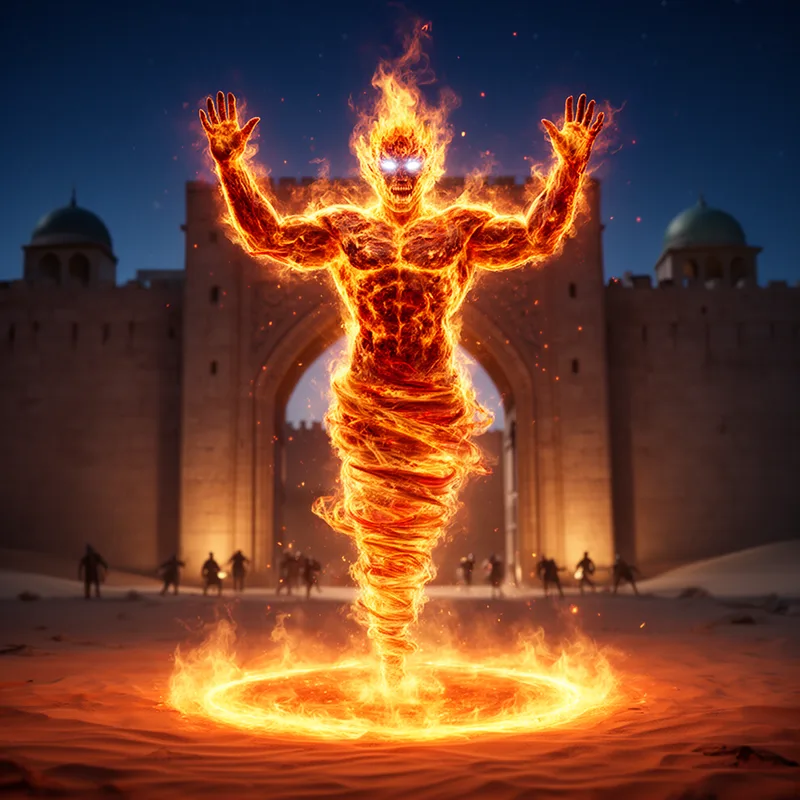
ifrit


 1
9.9
1
9.9
- noun
- /ˈɪfrɪt/
- Literature
- Ifrit by killing the other guy, Arlene pointing a gun at the latter's head, Granny's cryptic message, the Fairies showing at Sookie's.
Examples
-
The Ifrit jostled his arm, but aside from a glance of irritation, he did not notice it.
Fiction book (1994) -
The hero sought the guidance of an ifrit, believing this powerful spirit could help him in battle.
-
Was it indeed an Ifrit?
Fiction book (1994) -
Across the street, walking amid the crowds, he saw an Ifrit.
Fiction book (1994) -
The Ifrit wore the face of guilt and stalked its victim with staring mad eyes.
Fiction book (1994) -
For all his knowledge of the Koran and the Law, he walked right past the Ifrit without perceiving it.
Fiction book (1994) -
The two blades met with a bold ringing and slid along each other, the unexpected resistance causing the Ifrit to stumble back.
Fiction book (1994) -
Ifrits were tormentors and tricksters, but the guilts and sins of men were not normally their concern, for their essential substance was fire, not earth.
Fiction book (1994) -
In the ancient tales, the ifrit emerged from the flames, imposing and terrifying.
-
Legends describe the ifrit as a cunning creature of fire, often engaging in tricks to confuse mortals.
Synonyms

A powerful spirit from Arabic stories that often appears as fire

A powerful, dangerous spirit from Arabian stories that is often fiery
A powerful demon from Arabic stories that often causes harm or trouble
How Powerful

Surface Forms
Etymology
The word ifrit comes from Arabic and originally named a powerful spirit or demon often linked to fire. A helpful way to remember ifrit is to think of 'fire', which explains why today it means a strong, fiery supernatural being in stories and games.