
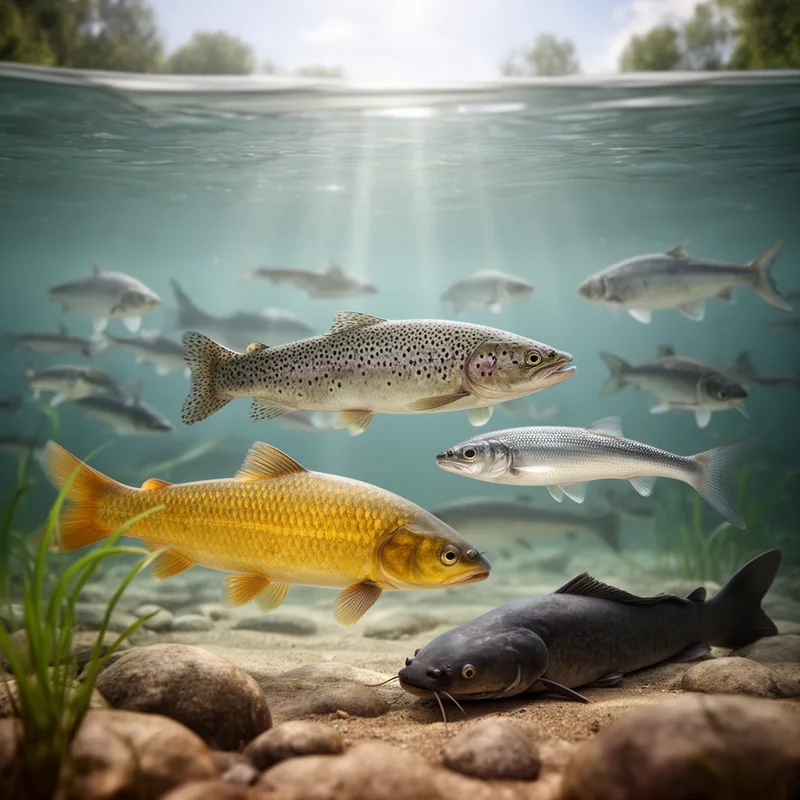
ichthyofauna
- noun
- /ɪkθiˈoʊfɔːnə/
- Specialized
- The ichthyofauna in this coastal region is threatened by pollution and overfishing.
Examples
-
Every dam causes unique environmental changes and, therefore, the nature and/or existence of its consequences to the ichthyofauna can be highly site-specific.
Academic text (2018) -
In addition, removal of the ichthyofauna alters linkages across the SWI because many estuarine fish feed on benthic invertebrates.
Academic text (2000) -
The teleost radiation, consisting of the most apical or "advanced" ray-finned fishes and responsible for much of the established ichthyofauna seen today, is one of the most remarkable species diversification events in the history of Earth.
Academic text (2010) -
By removing the ichthyofauna, outbreaks of this toxic dinoflagellate yield massive, episodic reductions in trophic complexity and species diversity in estuarine and coastal water columns.
Academic text (2000) -
The ichthyofauna of the Amazon River includes many unique species of fish that cannot be found anywhere else.
-
Researchers study the ichthyofauna in local lakes to understand the health of the aquatic ecosystem.
How Diverse


Surface Forms
Morphology
Etymology
Ichthyofauna is made of ichthyo- ('fish') and fauna ('the animals of a place'), so it means the types of fish that live in a particular region or habitat.