

to ice up
 1
4.3
1
4.3

- phrasal verb
- /aɪs ʌp/
- Make sure to drive carefully when the roads ice up in winter.
Examples
-
We iced up, Jarvis!
-
We're icing up.
-
For when the streets ice up.
-
Those roads can really ice up.
-
The fuel line is iced up.
-
They were iced up so badly the door wouldn't close.
Fiction book (1995) -
It iced up.
Fiction book (1990) -
Once again, the rigging iced up; the radio reported steepening seas and a fifty-five-knot gale.
Fiction book (1996) -
The sidewalks iced up overnight, making walking very treacherous.
-
If temperatures drop, the puddles in the parking lot will ice up quickly.
Synonyms
 770
1.0
770
1.0
Become solid because of cold, like water turning to ice
 7
2.2
7
2.2
To cover or become covered with a thin layer of ice in very cold weather
 2
3.4
2
3.4
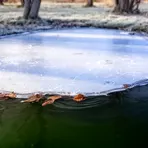
Get covered in ice, for example a pond or window

 1
3.2
1
3.2
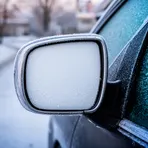
To get a thin layer of ice on windows or car mirrors
Antonyms

How Icy

Surface Forms
Morphology
The meaning 'to become covered with ice' is directly compositional from 'ice' (frozen water) plus the resultative/particle sense of 'up' indicating change into a state or completion. This motion/state-formation pattern is common and transparent cross-linguistically, so a B1 learner who knows the words will readily infer the MWE's meaning.
Etymology
The phrasal verb ice up comes from the simple image of ice forming up on a surface, like windows or pipes when water freezes. That's why ice up now means 'to become covered with a layer of ice', often making something slippery or unusable.