

icecap
 5
3.9
5
3.9

- noun
- /ˈaɪsˌkæp/
- The scientists studied the melting of the icecap in Antarctica to understand climate change.
- icecaps melt
- polar icecaps
Examples
-
The icecaps are melting faster than a lot of people expected.
Blog text (20) -
Oceans would rise by about 70 meters if the far bigger icecap on Antarctica melted along with Greenland.
Blog text (34) -
Donald says it's the icecap melting.
Fiction book (1993) -
The point is that it was warmer, the Arctic icecap was gone, and the Earth did just fine.
Blog text (9) -
And the icecap must gradually melt, changing the ocean currents.
-
They've built a military base under the polar icecap.
-
Henceforth, his research would be done in laboratories and at computers, away from the severe conditions of the icecap.
Fiction book (2000) -
In this 1995 movie, global warming has caused the polar icecaps to melt, covering the entire Earth in water.
Blog text (29) -
Moreover, world shipping routes will be transformed by new northern sea routes made possible by the melting polar icecap; these new sea lanes will shave thousands of nautical miles and up to seven days of travel time off current routes through the Suez and Panama canals.
Academic text (2010) -
The ozone layer is thinning; massive climate changes threaten to melt the polar icecaps, flooding vast coastal areas and turning presently fertile agricultural areas into desert.
Academic text (1993)
Synonyms
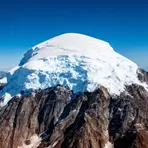 19
3.4
19
3.4
A thick layer of ice and snow that always covers large land areas like the poles or mountain tops
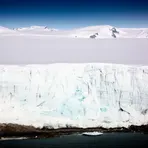 1
3.3
1
3.3
A large area of ice that forms part of a glacier or ice sheet
How Big
5
3.9

- UK
2
5.5
Surface Forms
Morphology
Etymology
Icecap comes from the simple parts ice and cap. A cap is like a 'hat', so an icecap is ice that 'covers' the land or a mountain like a frozen hat, which is why it means a thick, permanent mass of ice and snow over a large area.