

ice bear
- noun
- /aɪs bɛr/
- The documentary followed an ice bear as it hunted for seals on the frozen sea.
Examples
-
Many ice bears are losing their habitat due to climate change.
-
The ice bear is an excellent swimmer.
-
Children learned about the challenges faced by the ice bear due to climate change.
-
In the Arctic, the ice bear is a symbol of strength and resilience.
-
Children learned about the challenges faced by the ice bear due to climate change.
-
In the Arctic, the ice bear is a symbol of strength and resilience.
-
The documentary followed an ice bear as it hunted for seals on the frozen sea.
Synonyms
 957
1.0
957
1.0

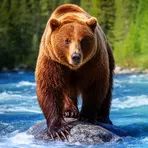
A large heavy animal with thick fur and strong claws
 37
1.1
37
1.1
A large white bear that lives in the Arctic and hunts seals on sea ice
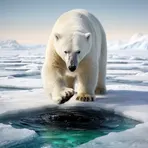
A large white bear that lives in the Arctic and hunts on sea ice

A large white bear that lives in the Arctic and hunts on sea ice
Surface Forms
Morphology
The meaning 'polar bear' is directly inferable from combining 'ice' (frozen sea/Arctic conditions) with 'bear' (the animal): it literally denotes a bear associated with icy regions. This is a transparent compound and similar compositional formations exist cross-linguistically (e.g., German Eisbär), so a B1 learner who knows both words would readily understand the intended meaning.
Etymology
Ice bear may come from people in the Arctic and early explorers who saw a big bear living on ice with white fur. The clear picture of a bear on the ice led to the name, so today ice bear means 'polar bear'.