
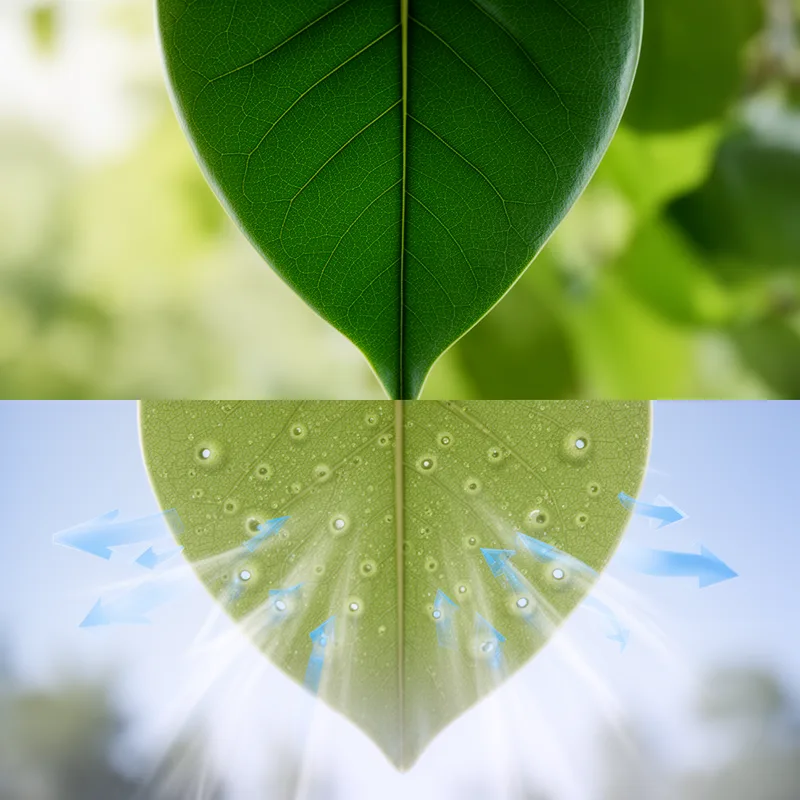
hypostomatous
- adjective
- /ˌhaɪpəˈstoʊmətəs/
- Specialized
- In hypostomatous plants, the stomata are located only on the underside of the leaves.
Examples
-
There is also evidence that stomatal opening and closing in hypostomatous shade leaves occur in response to the much greater amount of sunlight that is incident on the upper leaf surface (over 20-fold greater) and propagates to the lower epidermis, where the stomata are present (Smith 1981).
Academic text (1997) -
The hypostomatous design of the leaf helps reduce water loss by limiting exposure to sunlight.
-
Many aquatic plants are hypostomatous, allowing them to thrive in their submerged environments.
Surface Forms
Morphology
Etymology
Hypostomatous comes from the Greek parts hypo- meaning 'under' and stoma meaning 'mouth' or 'opening', the same root you see in stomata, the tiny breathing pores on leaves. So a hypostomatous leaf has its 'mouths' only on the lower side, which explains the modern meaning.

