

hyposmia
- noun
- /haɪˈpɒzmiə/
- Specialized
- Hyposmia can often be a sign of other underlying health issues that need to be addressed.
Examples
-
With the bypass, 6 patients scored 9 or 10 points (hyposmia), and 1 patient reached 13 points (normosmia).
Academic text (2008) -
With the larynx bypass, five patients reached a baseline score of eight points, which is the upper threshold of the anosmia category, and two others achieved even higher scores, moving from the anosmia category to the hyposmia category.
Academic text (2008) -
Generally, patients older than 50 years (as were all of our patients) can be classified thusly on the basis of their Sniffin' Sticks score: 0 to 8 points, anosmia; 9 to 11, hyposmia; 12 to 16, normosmia.
Academic text (2008) -
Many patients with hyposmia report difficulty in detecting subtle odors in their environment.
-
After suffering from a cold, she noticed she was experiencing hyposmia and could hardly smell anything.
Synonyms

A reduced or lost ability to smell things
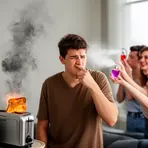
A condition where you cannot smell things like smoke or perfume

A problem with smelling that makes smells weak or wrong
How Sensitive
- Specialized

- Specialized
 1
9.3
1
9.3

Surface Forms
Morphology
hyposmia = hypo + osm + ia
The word is a learned medical formation from Greek elements meaning 'under' + 'smell', but its base is not a transparent English word for average learners.
Etymology
The word hyposmia comes from Greek parts hypo- meaning 'under' or 'less' and osme meaning 'smell'. Think of hypo- like in hypothermia ('low heat') to help remember it means 'less'. So hyposmia means a 'reduced' or weaker ability to smell, which explains its modern medical use.