
hypertext mark-up language
- noun
- /ˈhaɪpərˌtɛkst ˈmɑrkˌʌp ˈlæŋɡwɪdʒ/
- UK
 :
lenguaje de marcado de hipertexto
:
lenguaje de marcado de hipertexto
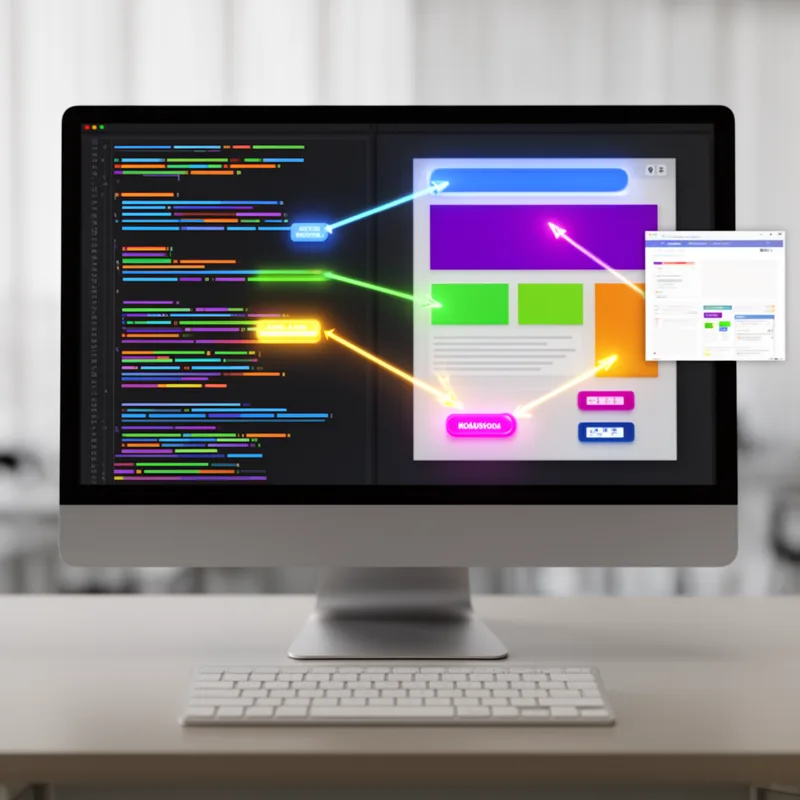
- To design a web page, you need to understand hypertext mark-up language, or HTML, which defines how text, images, and links are displayed.
- hypertext mark-up language (HTML)
Examples
-
XML is a relative of the hypertext markup language used to create web pages.
Academic text (2006) -
Commercialization was accelerated by the readily transmissible and graphic hypertext markup language (HTML), which supports an Internet function called the World Wide Web.
Academic text (1997) -
For example, a publication provided in hypertext markup language (HTML) can be resized by a user or read aloud with screen reading software, providing the accessibility advantages of an audio tape or large print version through a single electronic file.
Academic text (2006) -
The essential purpose of the browser is to read, electronically and over a telephone or Ethernet line, the digital code that makes up a Web page: the HTML (hypertext markup language) formatted document.
Academic text (1997) -
The website was built using hypertext mark-up language to create interactive links and formatted text.
-
Many tutorials teach beginners how to code using hypertext mark-up language for web development.
Synonyms

 79
3.5
79
3.5

A set of simple tags used to make and organise web pages

A set of simple rules that tell a browser how to show web pages
Surface Forms
Morphology
hypertext + mark-up + language
The phrase is compositionally built: 'hypertext' (linked text) + 'mark-up' (to annotate or tag) + 'language' (a system), so the overall meaning of a system for tagging hypertext is directly derivable from its parts. Although technical, the construction follows standard compounding/nominalization patterns (e.g., 'markup language') and would be understandable to a B1 learner who knows the constituents.
Etymology
Hypertext mark-up language gets its name from its parts. The word hypertext means text with 'links' that jump to other pages, and mark-up means adding small 'tags' to show a page's 'structure' and look, so the name explains that this 'language' is the way to write and format web pages with links.