
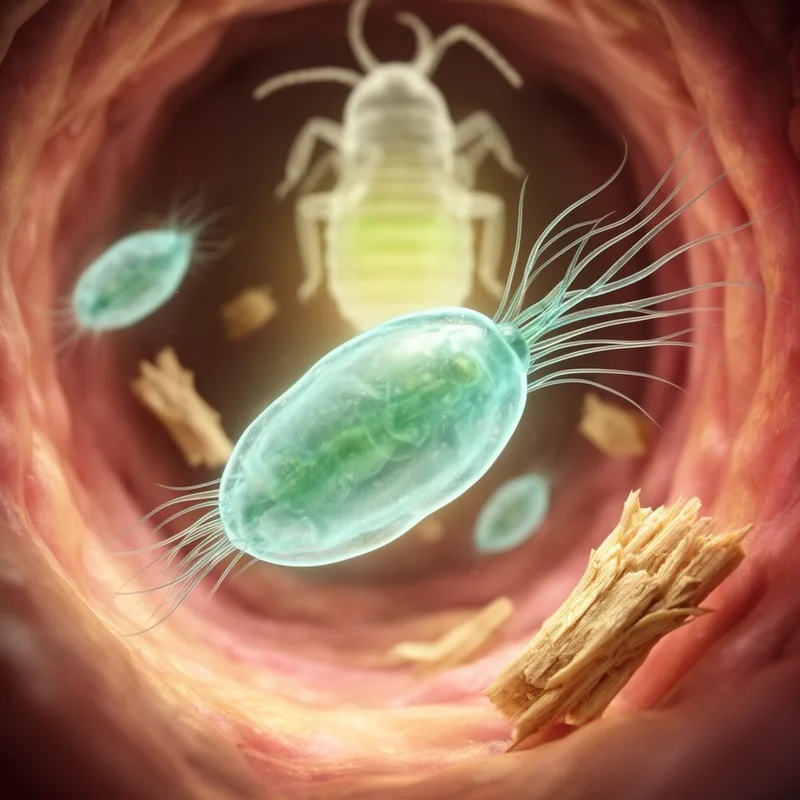
hypermastigote
- noun
- /ˌhaɪpərˈmæstɪɡoʊt/
- Specialized
- Hypermastigote protozoa are essential for the digestion of cellulose in termites.
Examples
-
The loss of hypermastigote symbionts can severely impact termite survival.
-
Many hypermastigotes inhabit the intestines of termites.
-
Scientists observed a significant increase in hypermastigote populations within the termite gut.
-
The hypermastigote is essential for termite digestion.
-
Hypermastigote protozoa are essential for the digestion of cellulose in termites.
-
Scientists observed a significant increase in hypermastigote populations within the termite gut.
-
The loss of hypermastigote symbionts can severely impact termite survival.
Synonyms
A single-cell creature that moves with tail-like parts and can cause disease in people

A single-celled organism that moves using whiplike tails and sometimes causes disease in people
Surface Forms
Morphology
hypermastigote = mastigote (opaque) = hyper + mastigote
The word is formed with the productive prefix hyper- plus mastigote, but the specialized biological sense is not readily recoverable for most learners from the parts alone.
Etymology
Hypermastigote comes from hyper- meaning 'more' or 'over' and mastig- meaning 'whip', because these tiny single-celled animals have many whip-like tails to move. So, a hypermastigote is a tiny creature with many whip-like tails that lives in insect guts like termites and helps them digest wood.

