

hyperexcitability
- noun
- /ˌhaɪpərɪkˌsaɪtəˈbɪləti/
- Specialized
- Doctors warned that hyperexcitability in the nervous system can lead to increased muscle spasms and anxiety.
Examples
-
Pharmacological manipulation of these target molecules might provide new approaches that could control neuronal hyperexcitability within the nociceptive pathways, and this could provide an opportunity for the development of new, more effective treatments that would minimize pain.
Academic text (2000) -
Pharmacological studies and ion substitution experiments subsequently confirmed a role of sodium channels in this hyperexcitability (44, 45).
Academic text (2000) -
Key words: DRG neuron, hyperexcitability; ion channels; nerve injury; neuropathic pain.
Academic text (2000) -
It is possible that hyperexcitability at the site of the visceral afferent processing due to inflammation causes pain.
Academic text (2007) -
Small-diameter afferent fibers connect to interneurons and synaptic mechanisms, which in turn produce long-lasting hyperexcitability.
Academic text (1999) -
As shown in Figure 8, abnormal accumulations of type III sodium channel protein are present close to the tips of injured axons within experimental neuromas (49), a site where hyperexcitability has been demonstrated (53, 62, 63).
Academic text (2000) -
The child exhibited signs of hyperexcitability after consuming too much sugar, making it difficult for her to settle down.
-
The clinical study found that patients with hyperexcitability often experienced heightened sensitivity to sensory stimuli.
Synonyms

 5
7.0
5
7.0

A very strong reaction to food, touch, or criticism
 1
7.5
1
7.5
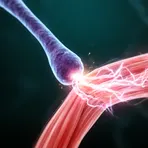
Unusually sensitive to small physical signals in a nerve or muscle


 1
9.9
1
9.9
An increased sensitivity to touch and other senses that makes even light contact painful
 1
6.3
1
6.3
A quick, strong reaction of anger or emotion

A strong, often overwhelming sensitivity to feelings, sounds, or events

A tendency to become lively or eager quickly

A time when someone feels very happy or nervous and cannot calm down

A state of very strong reaction to physical or emotional things

A change that makes the body react strongly to something after repeated exposure

How easily someone wakes up or becomes alert

A device that reacts to very weak signals and gives false readings
How Excitable
- Specialized

- Specialized
1
7.5
Surface Forms
Morphology
hyperexcitability = excitability (semi-transparent) = hyper + excite + able + ity
The word is transparently built with hyper- plus a nominal base, but the full medical or behavioral sense is somewhat specialized.
Etymology
Hyperexcitability is made of hyper- meaning 'too much', the word excite meaning 'to make active or emotional', and -ability meaning 'a state'. So, hyperexcitability means being 'too easily' excited or responsive, especially in nerves, muscles, or behavior.