
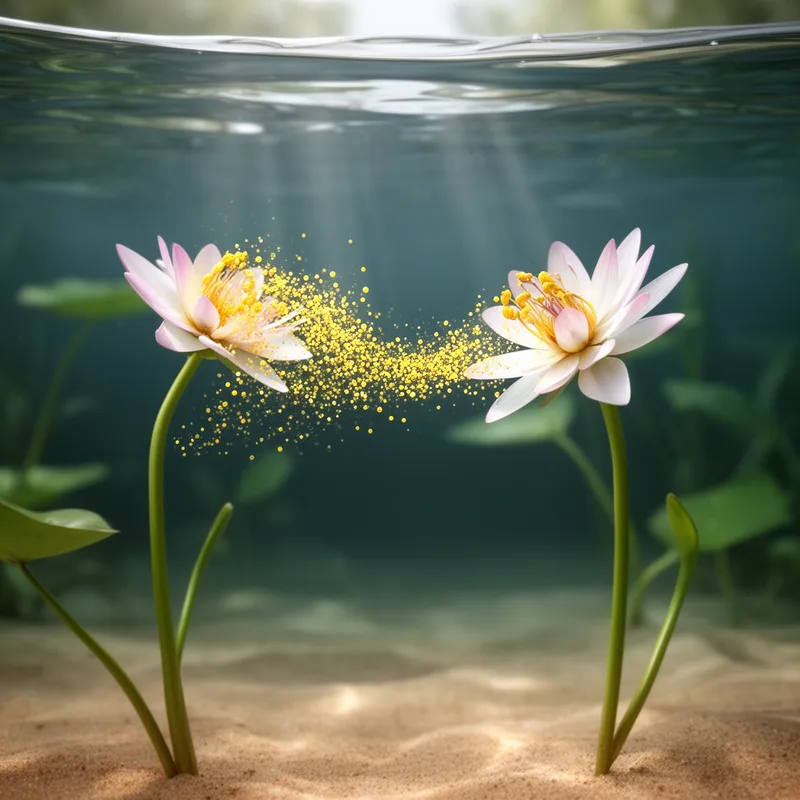
hydrophily
- noun
- /haɪˈdrɒfɪli/
- Specialized
- A few species have ultimately acquired adaptations for water pollination (hydrophily) in which pollen remains viable and is transported in direct contact with water.
- hydrophily (water pollination)
- hydrophily in water
Examples
-
Some species have acquired floral modifications that allow pollination to function efficiently in wet habitats, a phenomenon known as hydrophily.
Academic text (1996) -
Moreover, water-mediated cross-pollination (hydrophily) is unique to aquatic plants and represents perhaps the most divergent shift in angiosperm pollination systems.
Academic text (1996) -
The selfing-intermediate model explains how genotypes with features necessary for hydrophily to operate can be selected for and become fixed in a population.
Academic text (1996) -
The process of hydrophily allows aquatic plants to transfer pollen effectively through water.
-
In wet ecosystems, hydrophily plays a vital role in the reproduction of many plant species by using water currents to carry pollen.
-
Several types of water lilies rely on hydrophily to achieve successful pollination beneath the surface of ponds.
Surface Forms
Morphology
hydrophily = hydro + phil + y
The word is built from classical elements meaning roughly 'water' and 'attraction/affinity', but the specialized botanical sense 'pollination by water' is not predictable from those parts for most learners.
Etymology
The word hydrophily comes from two parts: hydro- meaning 'water' and -phily meaning 'love' or 'liking'. So hydrophily means pollination by water, where plants that 'love' water move pollen through water to other flowers.

