
hydromancy
- noun
- /ˌhaɪdrəˈmænsɪ/
- Archaic
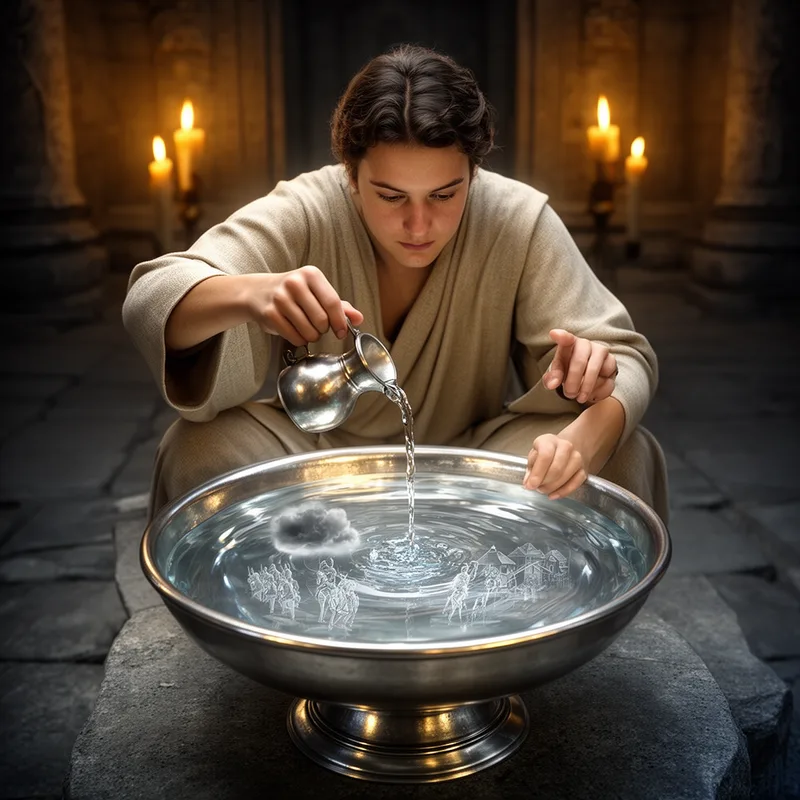
- In ancient times, people practiced hydromancy by observing the movements of water in a bowl to predict the future.
- hydromancy and lecanomancy
Examples
-
The vessel may reflect knowledge of antique divinatory culture and may even have been used in lecanomantic hydromancy, that is, divination through containers filled with water.
Academic text (2008) -
Lecanomancy and hydromancy were ancient mantic, or divinatory, techniques with relatively consistent textual traditions until at least the fifteenth century.
Academic text (2008) -
Eastern Origins of Lecanomancy and Hydromancy
Academic text (2008) -
The Mechanics of Lecanomancy and Hydromancy
Academic text (2008) -
Lecanomancy and hydromancy, in particular, were ascribed "Persian" origins by classical and Early Christian authors.
Academic text (2008) -
"Lecanomancy and hydromancy possessed ancient roots but were alive and well in middle Byzantine Constantinople."
Academic text (2008) -
She learned about hydromancy and how to interpret the patterns formed by ripples in a pond.
-
The fortune teller used hydromancy to give readings, relying on the water's surface to reveal hidden truths.
Synonyms

 8
9.9
8
9.9

The act of trying to find the future using magic or signs

A way to predict the future by reading patterns in water in a bowl
Surface Forms
Morphology
hydromancy = hydro + mancy
The term is built from the combining form hydro and the element mancy, but the specialized meaning is not reliably inferable for an average learner.
Etymology
Hydromancy comes from Greek roots hydro- meaning 'water', like in hydroelectric, and -mancy meaning 'divination' or 'telling the future'. So, hydromancy is the practice of watching water patterns or ripples to try to predict events.