
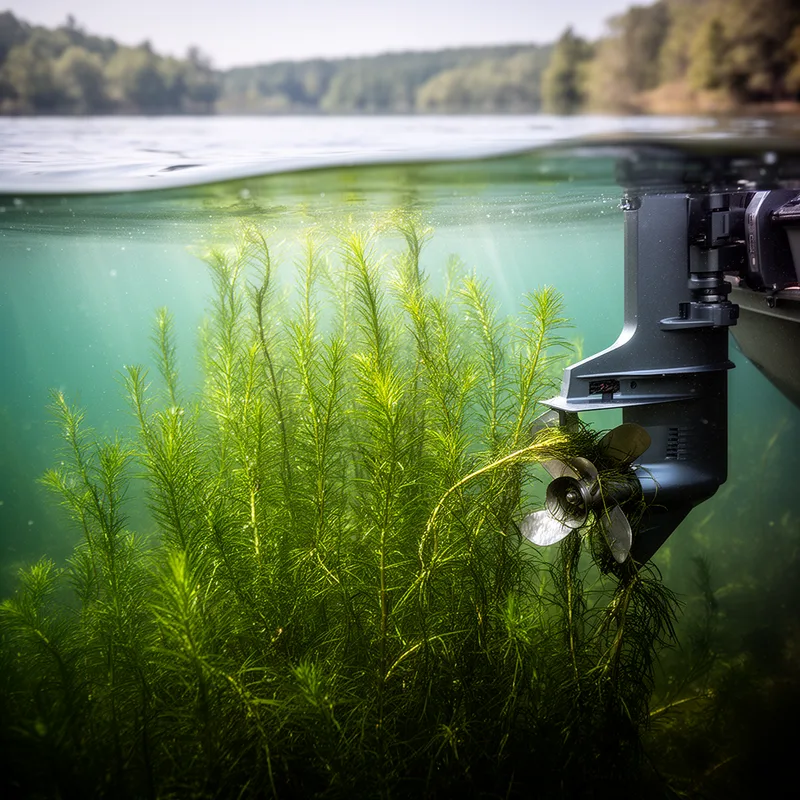
hydrilla


 1
9.9
- noun
- /haɪˈdrɪlə/
- hydrilla and milfoil
Examples
-
Yes, there's a lot of hydrilla in this area.
-
In the summer of 1998, hydrilla and water hyacinth—alien additions to the Texas landscape—thrived in waterways that nearly dried up during the drought.
Academic text (1999) -
Researchers there have discovered biological controls for many of the invasive wetland and aquatic weeds in the southern and western United States, such as melaleuca, Old World climbing fern, and hydrilla.
Academic text (2000) -
In many southern U.S. lakes, hydrilla can quickly cover the surface, making it hard for other plants to survive.
-
The presence of hydrilla has led to local boaters struggling to navigate through the thick mats of vegetation.
-
Experts warn that hydrilla can choke waterways, leading to decreased oxygen levels for fish and other aquatic life.
Synonyms
 1
7.8
A plant that grows under water in ponds or aquariums and spreads quickly
A water plant with narrow leaves in rings that grows fast and clogs lakes and rivers
Compounds
- Specialized
A water plant with narrow leaves in rings that grows fast and clogs lakes and rivers
Surface Forms
Etymology
Hydrilla comes from an old Greek root hydr- meaning 'water' plus a small-name ending -illa, so the name is like 'little water'. That's why hydrilla is a water plant that grows under the surface and can clog waterways.