
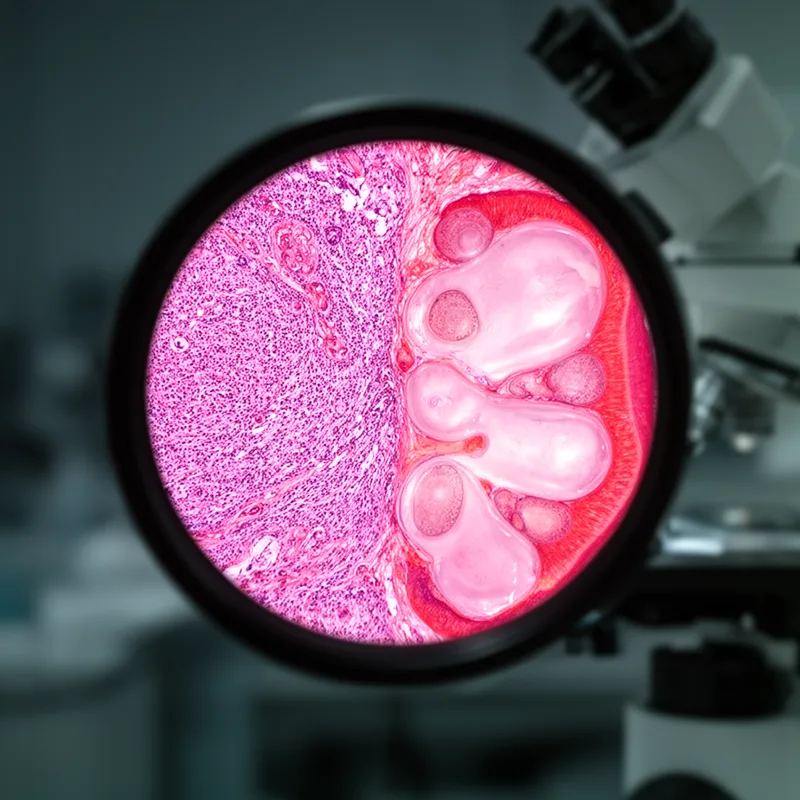
hyalinization
- noun
- /ˌhaɪəˌlɪnɪˈzeɪʃən/
- Specialized
- The pathologist noted that the tissue sample showed significant hyalinization, giving it a glassy appearance.
- perivascular hyalinization
Examples
-
Fibrosis and hyalinization can occur and are thought to be a result of aging and cystic degeneration.
Academic text (1996) -
Large cystic spaces, areas of hyalinization, and focal necrosis were identified.
Academic text (2005) -
Necrosis, hyalinization, and calcification may be present.
Academic text (2007) -
These include lack of mitosis, evidence of prior hemorrhage, and areas of degeneration with hyalinization.
Academic text (1996) -
Hemangiopericytoma-like areas were noted, where staghorn-type vessels demonstrated perivascular hyalinization (Figure 2, B).
Academic text (2006) -
These lesions had diffuse areas of hypocellularity and fibrosis with focal hyalinization.
Academic text (1996) -
Secondary features of malignant peripheral nerve sheath tumors include myxoid change, hyalinization, and geographic necrosis.
Academic text (2006) -
Under the microscope, the hyalinization of the cells was evident, indicating a degenerative process.
-
The report detailed areas of hyalinization within the affected tissue, which suggested a loss of cellular structure.
Surface Forms
Morphology
hyalinization = hyalinize (opaque) = hyalin + ization
The noun is directly built from the specialized verb 'hyalinize', but that medical term is not predictable for an average learner.
Etymology
Hyalinization comes from the root hyal- meaning 'glass' and the ending -ization meaning 'the process'. So, hyalinization is the process of tissue becoming 'glass-like' or clear and shiny under a microscope.

