
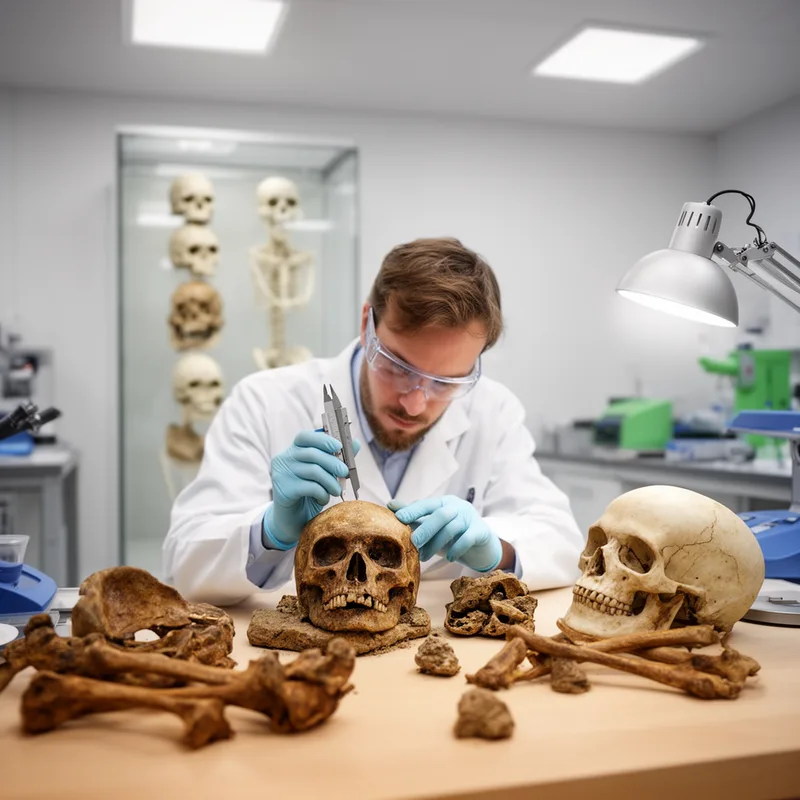
human paleontology
- noun
- /ˈhjuːmən ˌpeɪliˈɒntələdʒi/
- Specialized
- Important discoveries in human paleontology are often highlighted in scientific journals.
Examples
-
Advancements in human paleontology have greatly expanded our understanding of prehistoric humans.
-
The field of human paleontology is fascinating.
-
She chose to specialize in human paleontology because of her fascination with ancient human remains.
-
Many universities offer courses in human paleontology.
-
Researchers in human paleontology uncovered a significant fossil that sheds light on early human ancestors.
-
The conference focused on advances in human paleontology and the implications of recent fossil discoveries.
-
Students studying human paleontology learn how to analyze fossils to understand human evolution.
Synonyms

 1
9.9
1
9.9

Study of old human bones and how early humans changed

The study of how humans began and changed over time
Surface Forms
Morphology
The meaning is directly compositional: 'paleontology' (study of fossils) modified by 'human' specifies the subset concerned with human fossils, so a learner who knows both words can infer the field of study. This compound follows common academic noun-modifier patterns and has clear equivalents in many languages, making it immediately understandable to a B1 learner.
Etymology
The noun human paleontology comes from the simple image of scientists digging up very old human bones and tools. Human means people and paleontology is the study of ancient life from fossils, so the phrase shows studying old human remains and that's why it means 'the study of human fossils' today.