
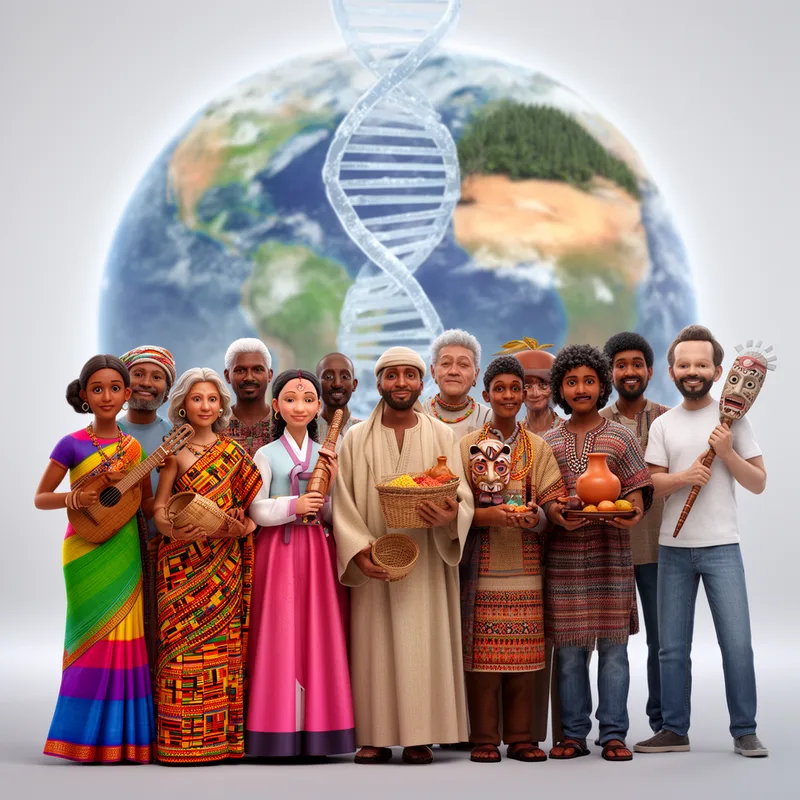
human biodiversity
- noun
- /ˈhjuːmən ˌbaɪoʊdaɪˈvɜːrsɪti/
- Specialized
- Understanding human biodiversity helps scientists study how populations adapt to different environments.
Examples
-
Educational programs on human biodiversity promote respect for both genetic and cultural differences.
-
Preserving human biodiversity is essential for maintaining a rich variety of languages and traditions.
-
The human biodiversity in the Amazon is remarkable.
-
Why is human biodiversity important for our survival?
-
Educational programs on human biodiversity promote respect for both genetic and cultural differences.
-
Preserving human biodiversity is essential for maintaining a rich variety of languages and traditions.
-
Understanding human biodiversity helps scientists study how populations adapt to different environments.
How Diverse


Surface Forms
Morphology
human + biodiversity
The meaning is directly compositional: 'human' (relating to people) + 'biodiversity' (variety/diversity of life) yields the idea of diversity among humans (genetic and cultural). This formation follows a common, predictable compounding pattern found across languages, so a B1 learner who knows both constituents would readily infer the MWE's meaning.
Etymology
Human biodiversity comes from the word biodiversity, which means many different kinds of life in nature, and adds human to point to people. Think of a garden with many kinds of flowers, so it means the 'variety' of genetic differences and cultural traits among humans.