

hostile expedition
- noun
- /ˈhɑːstaɪl ˌɛkspɪˈdɪʃən/
- Specialized
- The general led his troops on a hostile expedition across the border, aiming to secure new territory.
Examples
-
The army launched a hostile expedition into enemy territory.
-
The government sent a hostile expedition to quell the uprising in the distant region.
-
Historical records describe a hostile expedition launched against the neighboring kingdom.
-
Many historians study the effects of a hostile expedition on local populations.
-
Historical records describe a hostile expedition launched against the neighboring kingdom.
-
The general led his troops on a hostile expedition across the border, aiming to secure new territory.
-
The government sent a hostile expedition to quell the uprising in the distant region.
Synonyms

 476
4.3
476
4.3

An attack in which an army enters another country to take control
 56
3.7
56
3.7
A planned action by armed forces to achieve a goal
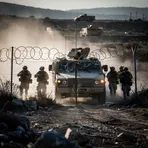 22
8.2
22
8.2
A sudden short attack into enemy land
 12
5.3
12
5.3
A military action with fighting to capture or defend a place
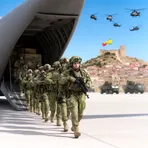 1
6.3
1
6.3
A trip by soldiers to fight and take control of a place in another country
Antonyms
 6
4.2
6
4.2
A military mission to stop fighting and make an area calm between groups or countries
How Aggressive
476
4.3

- Specialized
373
4.9
253
3.2
- Specialized
5
6.8
Surface Forms
Morphology
The meaning is directly and transparently derived from combining 'hostile' (from an enemy or characterized by aggression) with 'expedition' (a journey or organized operation). The adjective+noun composition clearly signals an adversarial or military operation (as opposed to a scientific expedition), a pattern common across languages, so a B1 learner who knows both words would readily infer the intended meaning.
Etymology
Hostile expedition comes from old military language: an expedition was a planned journey or mission and hostile meant 'enemy'. So the phrase gave a clear image of a mission sent to fight, which is why it now means a military action sent into another country to reach a goal.