
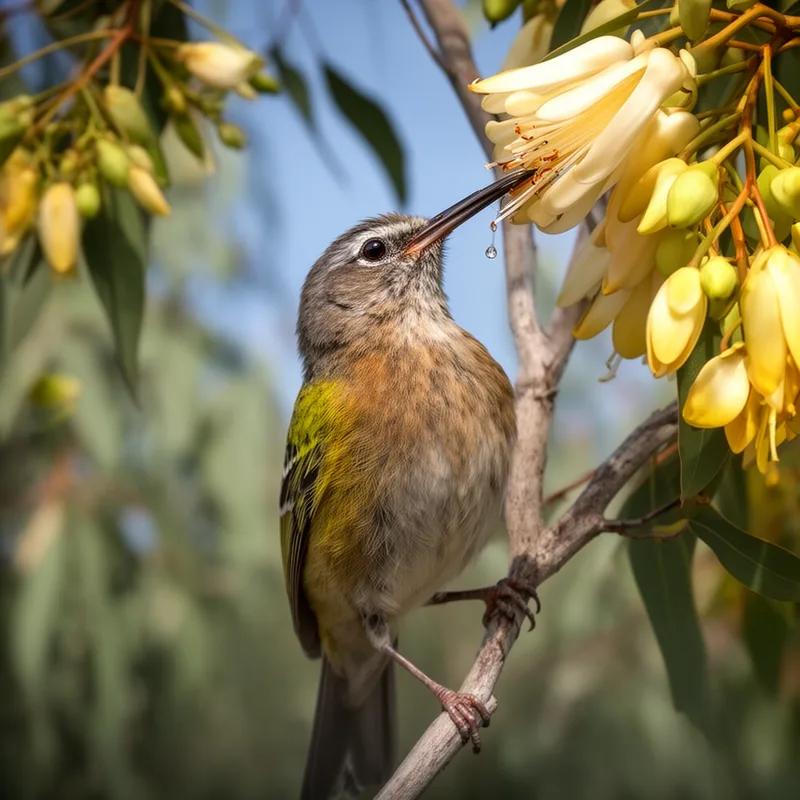
honey eater
- noun
- Australian
 :
comedores de néctar
:
comedores de néctar
- Several species of honey eaters are important pollinators in Australian ecosystems.
Examples
-
The honey eater uses its specialized bill to reach deep into flowers for nectar.
-
The honey eater perched on the branch.
-
We spotted a colorful honey eater feeding among the eucalyptus blossoms.
-
Many honey eaters are found in Australia.
-
The honey eater perched on the branch, using its long tongue to extract nectar from the vibrant flowers.
-
In summer, the honey eater visits our garden daily, drawn by the sweet scent of blossoms.
-
As the honey eater fed on the nectar, its vibrant plumage shimmered in the sunlight.
Synonyms
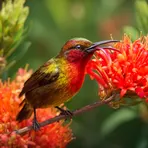
A bird from Australia that uses a long tongue and beak to drink nectar from flowers
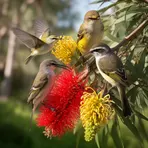
A family of small to medium birds that mostly drink nectar and live in Australia and nearby islands
Surface Forms
Morphology
The compound is directly analyzable as 'an eater of honey' from 'honey' + 'eater', following a common English noun+eater compounding pattern that is cross-linguistically transparent. Although the term specifically names a family of birds (Meliphagidae), a B1 learner who knows both constituents will readily infer it denotes an animal that eats honey/nectar, so the meaning is compositionally clear.
Etymology
Honey eater may come from the clear picture the name gives: these birds use a thin bill and long tongue to reach and drink the sweet 'nectar' inside flowers. So the name shows them as honey eaters, and today it means a bird that feeds on nectar.

