
homorganic
9.4
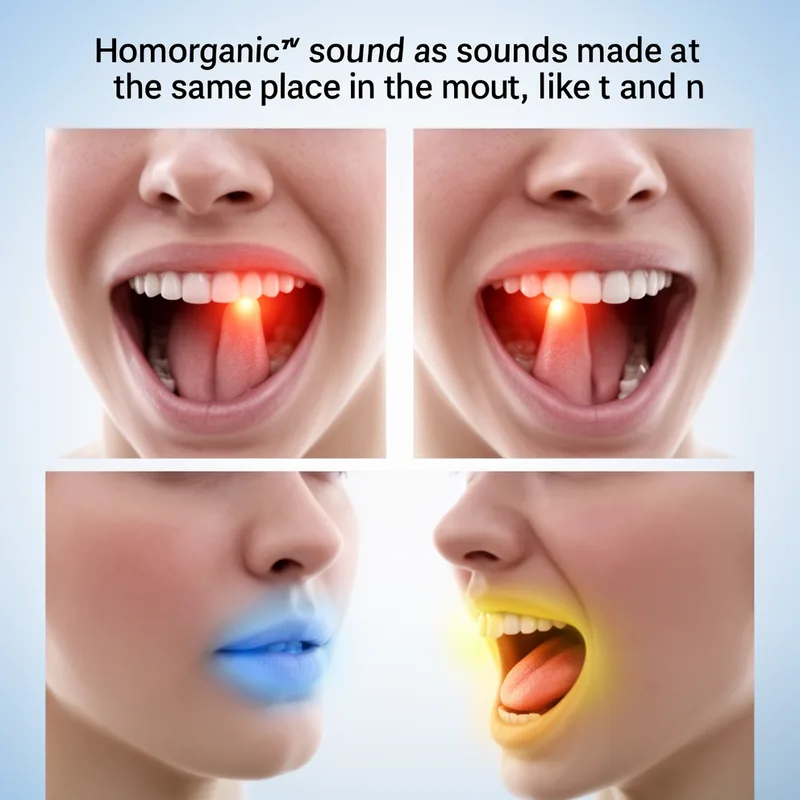
Sounds made at the same place in the mouth, like t and n
- adjective
- /ˌhoʊmɔrˈɡænɪk/
- Specialized
:
homorgánico
- In linguistics, the term homorganic refers to sounds that are produced with the same articulatory position, such as the 't' and 'd' in 'mat' and 'mad.'
Examples
-
When teaching pronunciation, it helps to identify homorganic consonants to improve students' articulation.
-
If there is no homorganic stop, then replacement is by a stop at the nearest place of articulation.
Academic text (2015) -
The phonetic transition between homorganic sounds makes speech flow more naturally for better clarity.
Surface Forms
homorganic positive
Morphology
Etymology
The word homorganic comes from Greek parts homo- meaning 'same' and organ meaning 'instrument' or 'body part', and you can see homo- in homophone ('same sound'). So homorganic describes sounds made by the 'same' organ in the mouth, which is why it means speech sounds produced at the same place in the mouth.

