
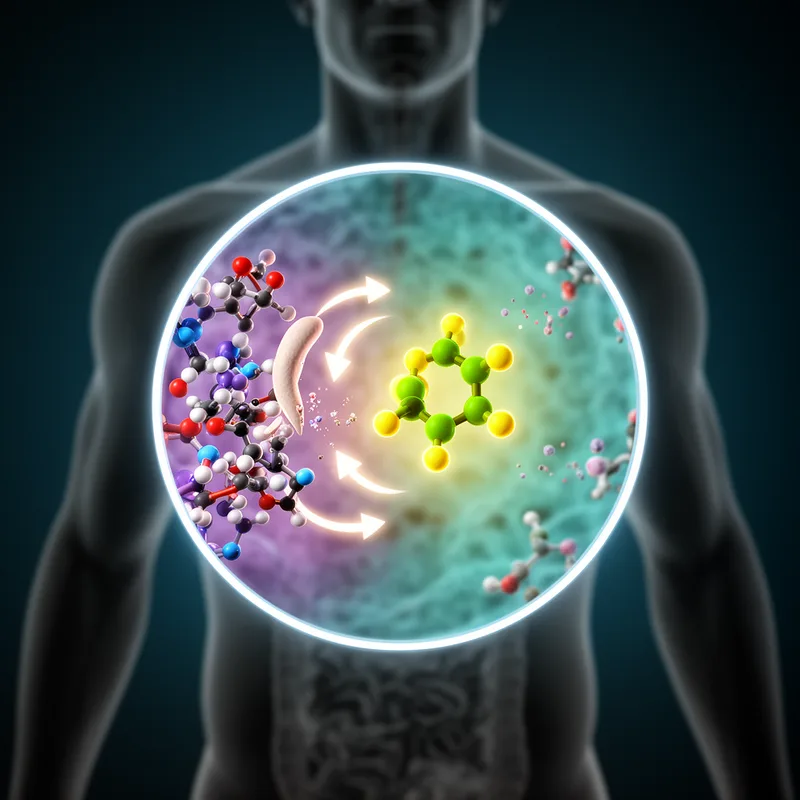
homogentisic acid
- noun
- /ˌhoʊmoʊˈdʒɛntɪsɪk ˈæsɪd/
- Specialized
- Alkaptonuria is caused by a buildup of homogentisic acid in the body.
Examples
-
The body produces homogentisic acid during the breakdown of tyrosine.
-
Researchers detected high levels of homogentisic acid in the patient's urine sample.
-
During tyrosine metabolism, homogentisic acid acts as a key intermediate.
-
Elevated levels of homogentisic acid can indicate a metabolic disorder.
-
Alkaptonuria is caused by a buildup of homogentisic acid in the body.
-
During tyrosine metabolism, homogentisic acid acts as a key intermediate.
-
Researchers detected high levels of homogentisic acid in the patient's urine sample.
Synonyms
A chemical that builds up in the body when the body cannot break down some parts of proteins

A chemical acid the body makes when it breaks down parts of proteins
Surface Forms
Morphology
homogentisic + acid
The element 'homogentisic' is a specialized, non‑decomposable biochemical label with no transparent lexical parts for a B1 learner, and the only familiar constituent 'acid' only indicates a chemical class. The specific meaning ('an intermediate in tyrosine/phenylalanine metabolism') is technical and not predictable from the parts, so the phrase is idiomatic/technical and opaque to learners.
Etymology
Homogentisic acid gets its name from two parts: homo (showing one extra part) and gentisic (a related acid), so the word paints it as a close chemical 'cousin' of gentisic acid. It appears as a middle acid when the body breaks down the amino acids tyrosine and phenylalanine, so the name points to its role as a 'middle' or 'in-between' step in that process.

