

hog-nosed badger
- noun
- Indian
- The hog-nosed badger uses its pig-like snout to unearth food from underground.
Examples
-
The hog-nosed badger uses its snout to dig for insects and roots in the forest.
-
Unlike European badgers, the hog-nosed badger is found primarily in Southeast Asia.
-
Researchers observed a hog-nosed badger displaying unique foraging behavior near the riverbank.
-
The hog-nosed badger is a fascinating creature.
-
I saw a hog-nosed badger at the wildlife park.
-
In Southeast Asia, the hog-nosed badger is known for its distinctive behavior and habitat.
-
Wildlife documentaries often feature the hog-nosed badger because of its unique foraging techniques.
Synonyms
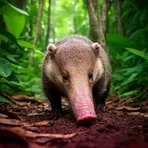
A small wild animal with a long pig-like nose found in Southeast Asia

A badger from Southeast Asia with a pig-like snout
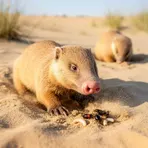
A small animal with a pig-like snout that lives in sandy places and digs for insects
Surface Forms
Morphology
hog-nosed + badger
The phrase is fully compositional: 'hog-nosed' can be parsed as 'having a hog-like nose' (derived from hog + nosed/nose) and combined with 'badger' denotes a badger with a pig-like snout. This literal, descriptive formation follows common English adjective-noun patterns and is easily inferable by a B1 learner who knows the constituent words.
Etymology
Hog-nosed badger: The name hog-nosed badger comes from people seeing a badger with a long, pig-like nose; hog means 'pig' and nosed points to its nose. That clear image of a badger using its strong nose to dig for insects and roots explains why the name fits the animal today.

