

hoary puccoon
- noun
- /ˈhɔːri pəˈkuːn/
- US
- The hoary puccoon blooms in spring, brightening prairies with its colorful flowers.
Examples
-
The hoary puccoon blooms beautifully in the spring.
-
Conservationists are working to restore hoary puccoon habitats across the Midwest.
-
Early settlers used the hoary puccoon root to produce natural dye.
-
Look at that hoary puccoon growing near the stream!
-
The artist used the vibrant red pigment from the hoary puccoon to create a stunning painting.
-
In spring, fields are often dotted with the bright yellow flowers of the hoary puccoon.
-
Many gardeners appreciate the hoary puccoon for its unique greyish hairy leaves and colorful blooms.
Synonyms

A North American plant with grey hairy leaves and yellow-orange flowers

A North American plant that lives for many years with grey hairy leaves and a red or yellow dye
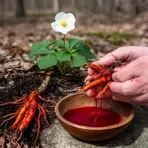
A North American plant whose roots give a red or yellow dye
Surface Forms
Morphology
The compound is transparently compositional: 'hoary' describes a greyish, hairy surface and 'puccoon' denotes a plant whose roots yield dye, so a learner who knows both words can infer 'a greyish/hairy plant that produces red or yellow dye.'. The adjective+noun structure is regular and cross-linguistically common, so despite being a rare botanical name the meaning is directly derivable from its parts for a B1 learner.
Etymology
Hoary puccoon describes how the plant looks and what it was used for: hoary means covered with soft grey hairs, and puccoon comes from a Native word for plants 'used as dye'. Early settlers boiled the root to make red or yellow dye, so the name points to a grey, hairy plant that gave color.

