
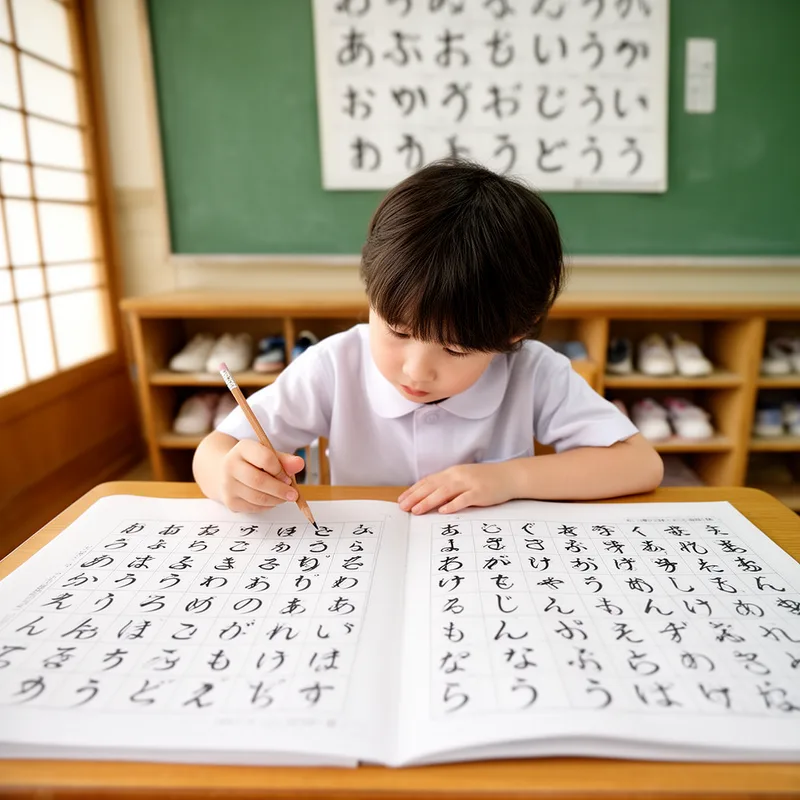
hiragana


 1
8.8
- noun
- /hɪrəˈɡɑːnə/
- Specialized
- All three modes of representation—Kanji, hiragana, and katakana—are ordinarily combined and used to write a sentence.
- hiragana and kanji
- hiragana and katakana
Examples
-
Hiragana, or the moraic alphabet, is used mainly for words of Japanese origin, conjugated endings, conjunctions, particles, and auxiliary verbs.
Academic text (2006) -
Hiragana represents pure Japanese sounds, whereas the other two alphabets incorporate foreign sounds.
Fiction book (1993) -
In this way, Kanji often constitute the "figure" and hiragana the "ground" on the page of a text.
Academic text (2006) -
Women of the Heian era wrote and refined Hiragana while the men used Chinese characters.
Fiction book (1993) -
Did you learn hiragana and kanji with proper stroke orders?
Blog text (26) -
I have to learn how to read kanji, hiragana and katakana from zero all by myself.
-
Modern Japanese is written in a combination of Kanji, Hiragana, and Katakana characters.
Fiction book (1993) -
In Japanese writing, hiragana is used for native words and grammatical elements.
-
To properly read Japanese, you need to learn hiragana along with kanji.
-
My teacher explained that hiragana characters are essential for writing in Japanese.
Synonyms
 1
8.0
A writing system where each symbol stands for a syllable like "ka" or "mo"
Surface Forms
Etymology
Hiragana comes from Japanese parts hira meaning 'plain' or 'simple' and gana (the same as kana) meaning 'syllable letters', so it is the 'simple' set of Japanese letters used to write native words and grammar.