
hexadecanoic acid
- noun
- /ˌhɛksəˈdɛkəˌnoʊɪk ˈæsɪd/
- Specialized
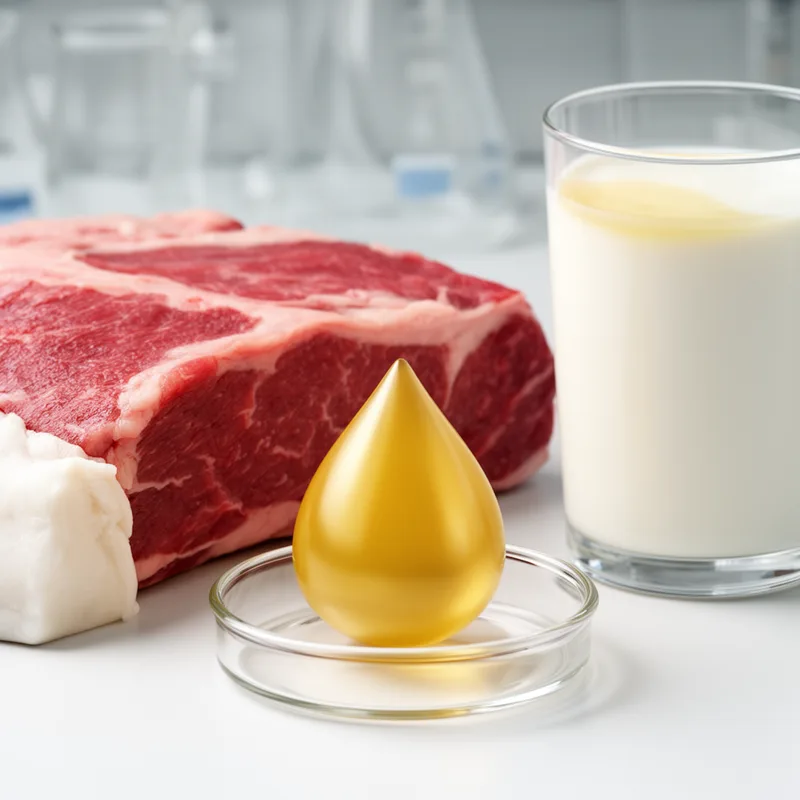
- Hexadecanoic acid, commonly known as palmitic acid, is a key component of the fat found in butter and meat.
Examples
-
The laboratory analysis detected high levels of hexadecanoic acid in the milk sample.
-
Many animal fats contain hexadecanoic acid.
-
Hexadecanoic acid is one of the most common saturated fatty acids in the human diet.
-
Researchers studied the effects of hexadecanoic acid on cellular metabolism.
-
The body produces hexadecanoic acid from carbohydrates.
-
High concentrations of hexadecanoic acid can be observed in the fat tissues of various livestock.
-
In food science, hexadecanoic acid is often measured for its contribution to the flavor and nutritional value of dairy products.
Synonyms



 1
5.5
A common fat in palm oil, meat, and dairy products
Surface Forms
Morphology
hexadecanoic + acid
The expression is transparently compositional: 'hexadecanoic' specifies a particular chemical chain/type (hexadec- = 16 carbons, -anoic = carboxylic acid) and 'acid' denotes a chemical acid, so the overall meaning (the specific fatty acid, palmitic acid) follows directly from the constituents. This is domain-specific nomenclature, so while the form is morphologically transparent if a learner knows the technical parts, it may be unfamiliar to typical B1 learners without chemistry knowledge.
Etymology
Hexadecanoic acid is a chemical name that tells you how many carbon atoms it has: hexa means six, deca means ten so together they give sixteen, and -oic acid shows it is an acid. So the name points to the common fatty acid 'palmitic acid' found in meat and dairy.