

hexacosanoic acid
- noun
- /ˌhɛkəˈkoʊsəˌnoʊɪk ˈæsɪd/
- Specialized
- Beeswax contains hexacosanoic acid as one of its main components.
Examples
-
Because of its high melting point, hexacosanoic acid is valuable in the manufacturing of certain waxes.
-
The chemical formula for hexacosanoic acid is C26H52O2.
-
Hexacosanoic acid is commonly extracted from beeswax for laboratory analysis.
-
Researchers studied the role of hexacosanoic acid in the protection of plant leaves.
-
Hexacosanoic acid is commonly extracted from beeswax for laboratory analysis.
-
Because of its high melting point, hexacosanoic acid is valuable in the manufacturing of certain waxes.
-
Beeswax contains hexacosanoic acid as one of its main components.
Synonyms
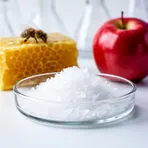
A white solid fatty acid found in natural waxes like beeswax
Surface Forms
Morphology
hexacosanoic + acid
Although the noun 'acid' is transparent, the constituent 'hexacosanoic' is a specialized, technical chemical-forming element not recognizable to a B1 learner (and is not listed in the dictionary entry). The overall meaning (a specific 26‑carbon fatty acid) depends on domain knowledge of systematic chemical nomenclature, so the phrase is effectively unintelligible from its parts for typical learners.
Etymology
Hexacosanoic acid literally tells its meaning: the part hexacos means '26' and the part acid shows it is a fatty acid. So the name says it is a long, waxy fat made of 26 carbon atoms, which is why scientists use it for the fatty acid found in beeswax.

